

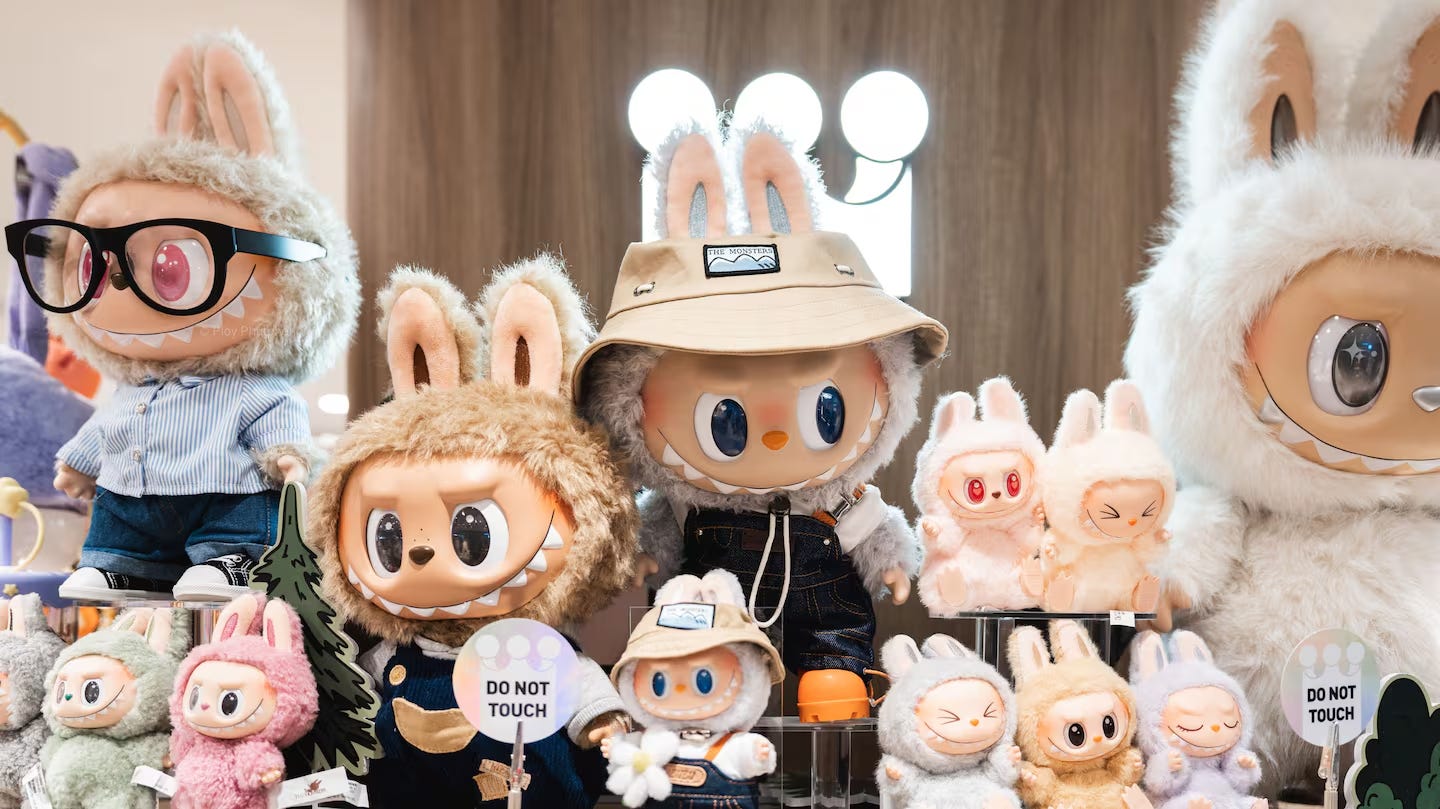
Last week, the Ministry of Trade announced that it had seized 132 toys with a market value of approximately 659,000 TL (about $16,250) at Istanbul Sabiha Gökçen Airport customs. Such expensive toys? They were actually viral Labubu dolls. So how did these toys, which are not approved for legal sale in Turkey, become a phenomenon big enough to be smuggled around the world?
*Source: https://www.businessoffashion.com/articles/marketing-pr/labubu-dolls-rise-pop-mart-tiktok/*
Meet Labubu dolls, described as "ugly-cute" with sharp teeth, big eyes and fluffy ears, who are quickly taking over social media and marketplaces. Created by Hong Kong artist Kasing Lung in 2015 as part of a Nordic-inspired picture book series, the characters became a global sensation when Chinese toy giant Pop Mart licensed and began producing the toys in 2019.
Cultural Clash on a Global Scale
The Labubu craze seems to be causing headaches in some other countries as well:
They have been officially banned in Erbil . Authorities cited "consumer exploitation" (blind box tactics) and "cultural concerns" (the doll's unconventional appearance). Around 2,000 Labubu dolls were recalled and legal action was taken against six businesses.
In the UK and South Korea, retailers halted in-store sales due to confusion over restocking. Chinese customs cracked down on smuggling, while in Russia some lawmakers proposed an outright ban on Labubu because of its "frightening appearance and psychological impact". In China, banks were banned from using Labubu as promotional gifts.
Some social media users have started a second wave of fear and anxiety by associating Labubu dolls with the ancient Mesopotamian demon Pazuzu, and some people have begun burning and destroying their dolls for this reason alone.
From a Toy to a Global Phenomenon
At the heart of Labubu's popularity are those "blind boxes" where you don't know which figure you're going to get. This created a "thrill of the hunt" and led to rare "secret" versions selling for thousands of dollars (for nostalgic examples, see: Kinder surprise eggs, Panini soccer cards). These dolls are the main reason why Pop Mart's revenues reached almost 2 billion dollars in 2024.
But the real explosion, as you can imagine, came with the unboxings on TikTok and the power of social media. When brands joined this trend to attract consumer attention, viral content snowballed.
E.l.f. Cosmetics, Ladurée, Coca-Cola and Uniqlo included Labubu in their campaigns through collaborations or licensed products. However, there have also been posts that have received backlash, such as Louis Vuitton's $1,200 Labubu-like "Vivienne Fashionista" bag jewelry or the allegedly fake Labubu carried by Urvashi Rautela.
Toys for grown-ups
Another factor that makes these toys shine is the "Kidulting" trend. Fueled by the interest in toys among adults who want to relieve the stress after the pandemic and touch their "inner child", brands are shaping their product range according to "those who remain children" to appeal to this new buyer profile.
Celebrities were also quick to join this trend. Lisa from Blackpink, Rihanna, Kim Kardashian, Kim Kardashian and even David Beckham displaying Labubu charms on their bags multiplied the craze. Thus, Labubu became not only a toy but also a fashion accessory.
Summary for Brands
All in all, the Labubu craze is a great example of how brands can capitalize on niche fan bases. As a tiny figure goes viral on social media and is smuggled from country to country, brands are trying to figure out where to stand in the excitement. Even niche communities can turn into collective excitement with the right levers in the global market.
This is not the magic power of marketing, but rather a burning feeling that the "inner child" is waiting somewhere. This is why this trend, which started with a toy, reveals how marketing strategies, cultural sensitivities and consumer psychology are intertwined.