

Do you remember Robinhood? If you’re thinking about the English fairy tale hero Robin Hood, I want you to think again. Because the anger felt towards Wall Street, which caused a global financial crisis in 2008, led a handful of activists using this app to create a truly unbelievable event in 2021.

Robinhood was an app founded in 2015 that stood out with its feature of commission-free trading on American stock markets. Until 2021, it was a platform where young people who were afraid of stock market investment came in large numbers because of this commission-free trading convenience. You could buy and sell shares both without commission and very easily. And it’s still like that. But in 2021, a handful of young activists who gathered on the Reddit platform started an operation using this commission-free trading model as a tool. The share at the center of this operation was GameStop stock.
The GameStop Operation
GameStop was a retail company whose business model was weakening because of digitalization in the gaming sector and was losing money in its physical stores. Big hedge funds saw this situation as an opportunity and took heavy short selling positions, betting that the company’s shares would fall. In fact, the amount of shares sold short reached 140% of the total number of shares.
A “hedge fund” is a private fund that invests in various assets using investors’ money and is usually managed by professional managers. Their goal is to provide absolute returns regardless of market conditions. These funds can take both long and short positions: they can buy by betting that an asset’s value will increase (long), or they can make profit by borrowing and selling if they believe it will fall (short). With complex strategies, they can make money both when the market rises and falls.
Of course, this situation didn’t only catch the attention of Wall Street sharks. The WallStreetBets community on Reddit noticed this excessive short selling amount and that the share was below its real value. When Ryan Cohen invested in the company and names like Michael Burry drew attention to the share, small investors also started buying in an organized way on the Reddit platform. And in these purchases, the favorite app of small investors, Robinhood, was used.
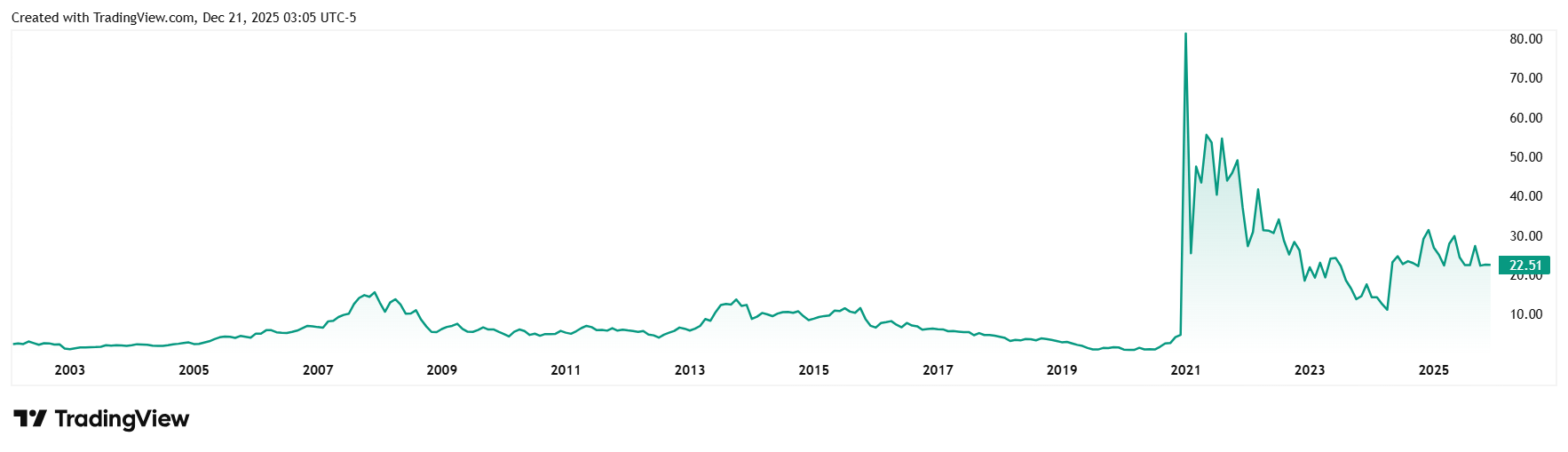
With the purchases of this highly collective community and social media support, the share price jumped from $20 to $483 in January 2021. This situation caused the hedge funds that bet on the price fall to panic and have to buy shares to stop their losses, which made the price go even higher.
I won’t go into more technical details here, but the amazing rise also ended when the Robinhood app at the center of events announced that it couldn’t meet the increasing margin requirements and stopped GameStop share purchases. GameStop is still alive, and the hedge funds that gambled that the share would fall wrote huge losses. For those who are curious, one GameStop share is currently $22.51.
Of course, if Robinhood hadn’t put this buying ban, completely different things could have happened. For example, there could have been many bankrupt hedge funds. The CEO defends themselves on this issue and says they could do this, meaning they ran out of cash to meet the margin requirement and had no other choice. We have no choice but to believe this.
Real World Assets
I may have made the introduction a bit long, but we needed to remember this story again before explaining what Robinhood is trying to do now. This financial initiative that started in 2021 to break the dominance of brokerage firms is now appearing before us again in a completely different way.
While the idea at its foundation was for everyone to be able to buy and sell shares without commission, now it wants to make everyone an asset owner. For this, it uses blockchain instead of classical stock markets that are operationally expensive, slow, and don’t allow 24/7 trading. We can actually call this briefly the tokenization of real world assets.
To give an example: The shares of companies with huge growth potential like OpenAI or SpaceX are only accessible to accredited investors and venture capital (VC) funds because they are not publicly traded. Robinhood aims to open these “closed companies” to individual investors using tokenization technology. Robinhood CEO Vlad Tenev explains the work they are trying to do like this: “The traditional finance system is like a duck that crazily paddles its legs under water but looks calm on the surface; you think you bought the share, but in the background, there is complex settlement and collateral traffic that goes on for days. With tokenization, Robinhood is trying to eliminate this traffic and make the system as fast and direct as a light turning on instantly when you press a button.”
The tokenized real world assets market passed the $30 billion limit long ago as of the third quarter of 2025. Reports from institutions like Citi and Boston Consulting Group predict that the tokenized asset market could reach a size between $13.5 trillion and $16 trillion by 2030. Of course, this huge growth potential attracts the attention of not only Robinhood but many players. In the tokenization race, there are serious competitors like Coinbase (America’s largest crypto exchange, developing institutional tokenization solutions), Securitize (a platform specialized in tokenization of private company shares), tZERO (Overstock’s blockchain securities platform), Republic (a platform offering tokenization service in private market investments), and Figure (focused on tokenization of mortgages and other assets). But Robinhood’s user base of over 23 million and its experience in commission-free trading can provide a significant advantage in this competition.
It seems that the tokenization of real world assets and stablecoins may have finally brought Bitcoin technology to product-market fit. Tokenized assets represent a high-value engine, while stablecoins represent the fuel that makes this engine work. This pair can finally make blockchain achieve “market-fit” by transforming it from a complex but unused technology into a global financial highway where billions of dollars change hands in seconds. What do you think about this?
See you in the next article.
Sources:
Investax. Q3 2025 Real World Asset Tokenization Market Report https://investax.io/blog/q3-2025-real-world-asset-tokenization-market-report
YouTube. Robinhood CEO: Making Everyone An Owner
Ivest. Tokenization Revolution: Robinhood Reshaping Private Market Access for Retail Investors https://www.ainvest.com/news/tokenization-revolution-robinhood-reshaping-private-market-access-retail-investors-2507
CryptoRank. SEC Raises Concerns Over Tokenized Assets While Robinhood Shares Surge https://cryptorank.io/news/feed/07821-sec-raises-concerns-over-tokenized-assets-while-robinhood-shares-surge