


As the year wraps up, think tanks and consulting giants return to the stage with their favorite ritual: new AI reports and new promises. Not exactly shocking. Most of the “game-changing” ideas from last year either became ordinary or never happened. In this series, we’re not only asking “what are they saying?” but also “why now and to whom?” In this first part, we look at how McKinsey positions AI agents within its corporate innovation agenda, and what that means for marketing.
This year, McKinsey released The State of AI in 2025 under the QuantumBlack umbrella. The study surveyed 1,993 employees from 105 countries between June 29 and July 29. Which means the post-July 2025 explosion of vertical agents and local startups like Kumru is mostly outside the frame. The shift from “a tool that automates campaigns” to “an agent that orchestrates customer experience end-to-end” hasn’t fully entered the picture yet.
What’s Inside the Report?
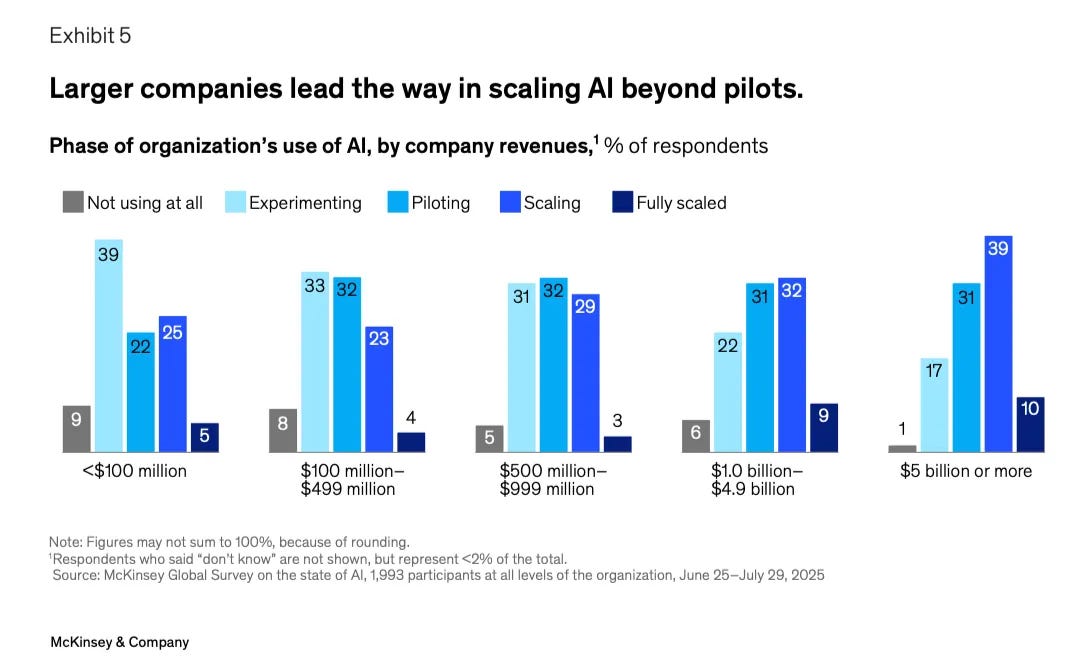
The report looks at AI usage among employees, how deeply AI agents have made their way into corporate workflows, and how all of this affects performance. The first takeaway: AI adoption is widespread, but we’re still in the trial-and-error era. Eighty-eight percent of companies use AI in at least one function, yet only a third have begun to scale. In other words: everyone is “doing AI,” but very few have wired it into the company’s nervous system.
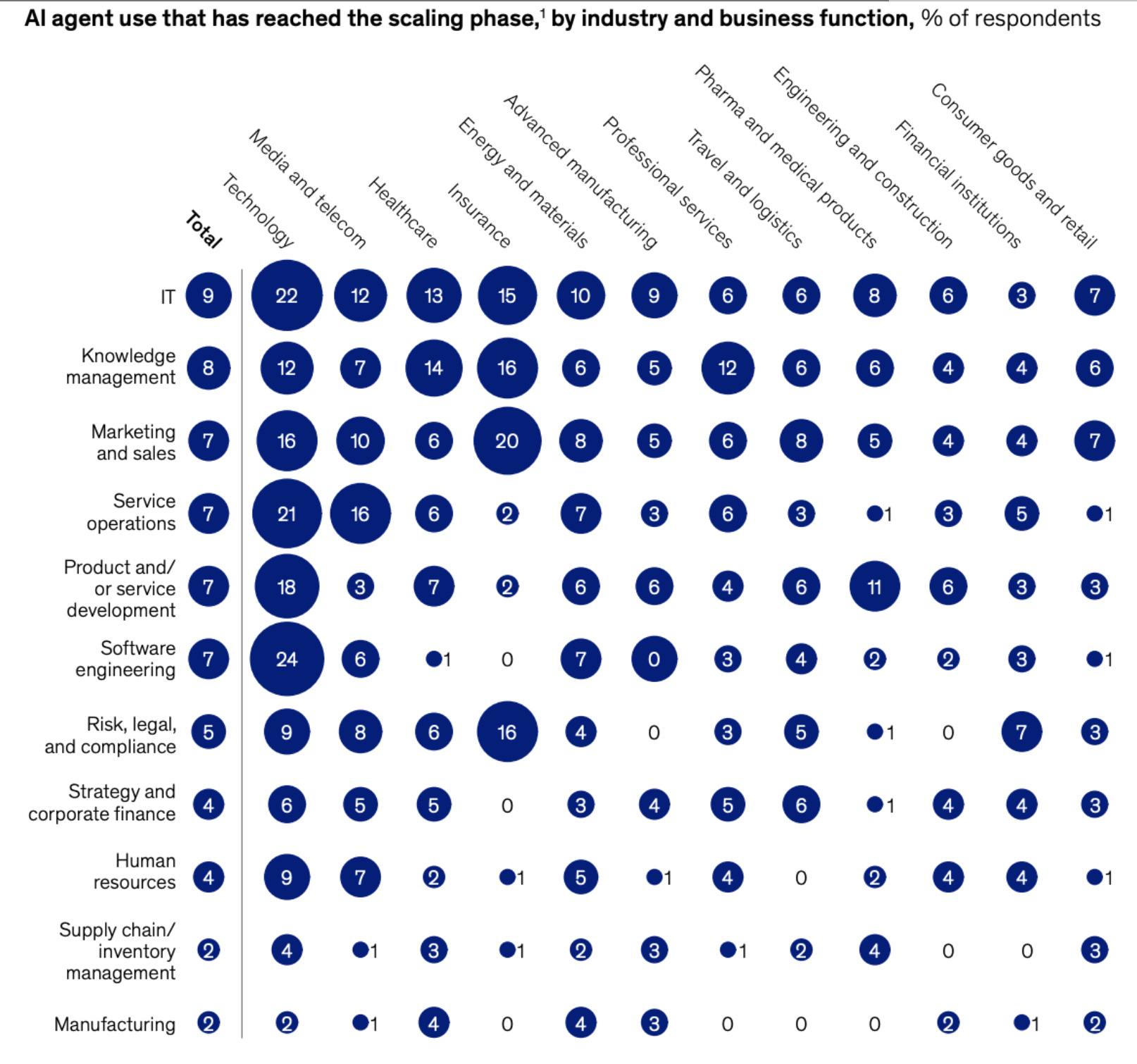
IT, marketing, and sales lead the way, with knowledge management rising surprisingly fast. AI is no longer only writing campaign copy; it’s tidying up institutional memory. Most common use cases: information gathering and summarization, creative support for marketing, customer-service automation. In short: AI has entered the house, but it’s still sitting in the guest room.
What Does AI Actually Improve—and Who Wins?
McKinsey lists the top value creators as innovation, employee and customer satisfaction, and competitive advantage. There’s a visible jump in innovation and satisfaction metrics. Financially, gains in market share, revenue, and profitability are limited but positive.
But the real story lies with “high-performing” companies—those seeing meaningful profit boosts from AI. They treat AI not as cheap automation, but as a transformation engine. They redesign workflows, pull leaders into the process, and build tech around those decisions. With a human-in-the-loop mindset, they place human oversight inside the system, not outside it. Their shared traits are clear: human-supervised systems, AI-ready infrastructure, involved leadership, and an intentional roadmap. AI isn’t a tool for them; it’s the organizational nervous system.
Airbnb is moving in this direction too—pursuing both a superapp ambition and an AI-first identity. The company wants to turn its platform into a travel engine that plans your entire journey and inspires you along the way. Details are here.
Everybody Uses AI—So What Happens Next?
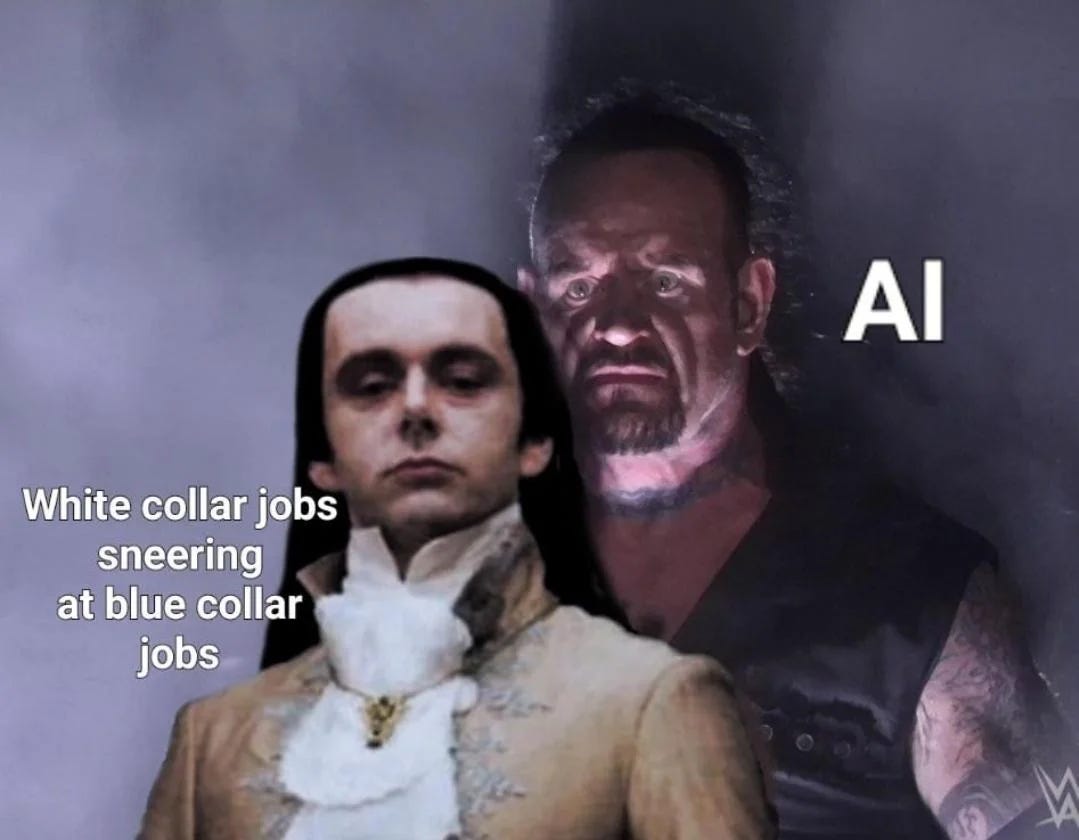
Corporate enthusiasm is high, but the question of “what comes after this?” remains unanswered. Some respondents expect workforce reductions; a smaller group expects growth. Large companies anticipate reductions more than small ones—scale seems to increase the temptation to frame AI as a “people-savings” mechanism.
And of course, when it comes to “saving people,” no one beats the capitalists at Morgan Stanley. Their GPT-4-powered knowledge system gives 16,000 financial advisors instant access to over 100,000 documents, effectively shrinking the need for interns and junior-level roles.
McKinsey’s core message is simple: AI’s real potential hasn’t kicked in yet. Companies are still at the “we tried it, it’s decent” stage. Yes, there are efficiency gains, but company wide transformations that show up in big bold letters on the balance sheet? Rare. What we’re seeing today is the trailer; the movie begins when systems mature.
The Real Question for Marketers: What Are We Building With AI?
Marketing became one of the earliest and also shallowest use cases for AI. Write copy, segment audiences, schedule campaigns, optimize budgets. It works, sure, but that’s not where the real game is. McKinsey’s findings point toward deeper value for those who treat AI as a strategic transformation tool.
For marketers, this translates to three shifts: moving from efficiency to experience (not “how many campaigns?” but “how meaningful is the experience?”), accepting that brand perception is now co-authored by humans and machines (without transparency and ethics, trust erodes), and taking on a bridge role inside the organization (turning customer data into empathetic storytelling).
From the Background to Center Stage: AI Agents
For years, AI lived backstage as a “smart engine.” Now, with agentic AI, it’s stepping into the spotlight. Some companies already use autonomous AI agents that can execute tasks independently. These agents don’t just generate content; they coordinate campaigns end-to-end, update CRM while talking to customers, and make operational suggestions.
This shifts the marketer’s question from “What can I ask AI to do?” to “What can I build with AI?” Setting the goal, defining context, drawing ethical boundaries, and shaping the narrative are human responsibilities.
Autonomy brings efficiency, but also new anxieties. When AI agents speak on behalf of the brand, the inevitable question arises: “Did we say this, or did the system choose it for us?” This hybrid accountability creates a new need for transparency and traceability. Instead of automation, governance will be the next big conversation. We all see how it will effect our jobs.
The Year Is 2026: The Marketer’s New Role
As we enter 2026, the marketer’s job isn’t just installing more automation. It’s designing a new human condition, one where AI stands not in the back office, but on the front lines shaping stories and experiences.
The real task is explaining not just what these systems do, but why. We need a vision where brand identity is co-managed with algorithms, customer experience is a human machine collaboration, and trust depends not only on performance but on intention. Treating AI merely as a convenience is the real risk. Because AI is now part of how we create value and that value is still produced for humans, in the name of humans.
I wouldn’t normally choose Coca-Cola as an example here, but there’s a genuinely well executed case: the “Y3000” product and its global campaigns were designed with AI. They used AI to shape a flavor and visual world that resonates with young consumers. Content produced via their Create Real Magic platform reached millions. For the curious, the source is here.
AI can write the story, yes. But the central question remains:
“Why are we telling this story, and on whose behalf?”