

On the morning of February 28, 2026, the traffic cameras in Tehran were doing their normal job. They were watching the streets, the main roads, and the area in front of government buildings. But that morning, these video images were not only on the screens of the traffic office. Thousands of kilometers away, in another control room, analysts were also watching the same cameras. For weeks, they had been studying the target’s daily movements, the schedule of his bodyguards, and the license plates of his cars. To plan an attack, they did not need to send any agents to the city. The city’s own systems gave them everything they needed.
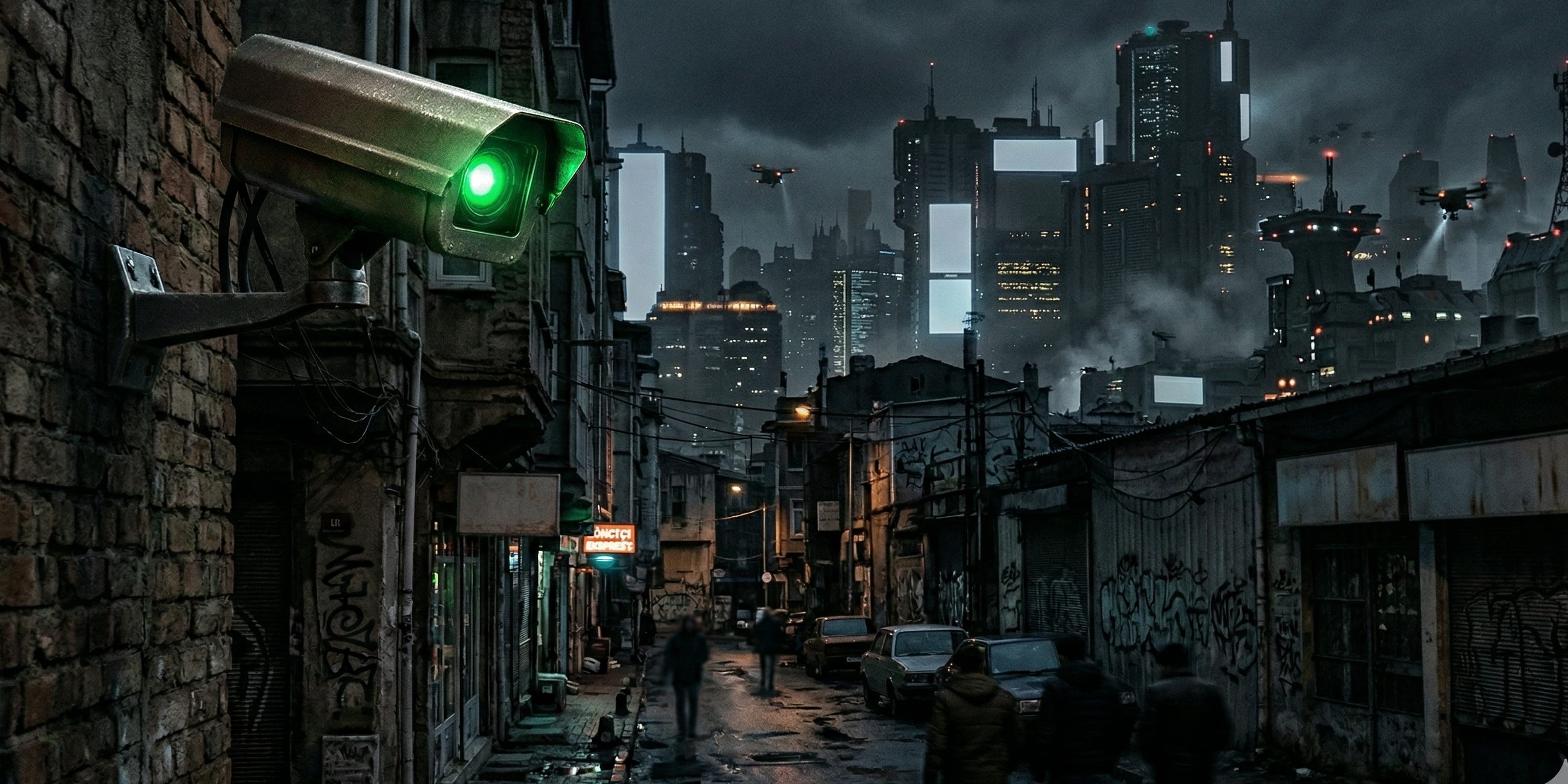
I wrote this story after reading a real news report. According to the report, the Israeli army and the CIA broke into Tehran’s traffic cameras. They used these cameras to study the movement patterns (in intelligence language, this is called “patterns of life”) of the bodyguards of religious leader Ali Khamenei. So this idea is not just fiction, it is based on a real event. Intelligence sources said that the analysts started to know Tehran as well as their own capital city. In short, a city’s normal traffic system became the main tool for one of the most complex attack operations in the world.
How Can a Simple Camera Become a Weapon?
How is this possible? The answer is not about new technology. The answer is about how often people forget basic safety steps.
According to the security company Check Point, millions of cameras made by companies like Hikvision and Dahua still have security problems from 2017. These problems should have been fixed years ago. But most users never update their camera software, so these problems continue to create risk year after year. For an army, this is a great opportunity. They get a watching system that is much cheaper than million-dollar satellites, more secret than anything air defense systems can find, and gives more detail than drones can ever provide. And the best part for them: the victim installs this watching system in front of his own house by himself.
From Ukraine to the Middle East: This Is Becoming a Standard Method
This method did not start with the Iran war. The first big examples happened on the Ukrainian front.
In early 2024, Ukraine’s intelligence service SSU found that Russia had taken control of two civilian security cameras in Kyiv. Russia was using these cameras to watch important buildings and air defense systems. Even more shocking: the cameras were connected to missile guidance systems. Russia was using the live camera images in real time to make their missiles hit the target more often. After this, Ukraine learned to play the same game. Ukraine used civilian cameras to watch Russian military movements on the Kerch Bridge. They also used the same method to confirm attacks that destroyed Russian submarines. Both sides were trying to see the other side’s blind spots through civilian cameras.
On the Iranian side, the situation became even bigger. Hacker groups like “Handala,” which are connected to Iran, tried to break into hundreds of civilian cameras during something called Operation Epic Fury. These cameras were in Israel, Bahrain, Qatar, Kuwait, Lebanon, and the UAE. The timing was not an accident. The cyber attacks happened almost at the same minute as Iran’s missile and drone attacks. The goal was to watch in real time if the missiles hit their targets. In other words, they wanted to check the damage by using thousands of civilian eyes already placed inside enemy land.
The Invisible Part of the Kill Chain
Civilian cameras are now an important part of what military experts call the “kill chain.” A camera does not hurt anyone directly. But it plays a big role when planning an attack, calculating a missile’s path, or choosing the right moment for an attack on important buildings. This makes the camera one of the quietest but most important parts of the chain. According to Check Point researchers, for any group planning a military or intelligence operation, taking control of camera systems is now one of the simplest and most useful first steps.
How Can You Protect Yourself?
This threat is not just an idea, it is real. You cannot stop street cameras, but you can protect your own devices. For example:
Do not forget to update your devices. Most attacks happen through security problems that have been waiting to be fixed for years. Check for updates from the maker of your device often.
Try to keep your cameras off the open internet. Instead of connecting your cameras directly to the internet, you can keep them behind a VPN. This makes attacks much harder.
Turn off your cameras during a crisis. Ukraine turned off more than 10,000 internet-connected cameras during the war to stop Russia from using them. This is a decision for organizations, not just one person. But without personal awareness, organizational decisions also do not work well.
Companies must be responsible. A security problem in one camera can cost someone’s life thousands of kilometers away. For devices used in public safety areas, we need stronger rules and clear responsibility. We must also think about the makers and the laws of the countries where they are based.
The camera you put on the corner of your house today, or at the entrance of your shop, may be giving information to an army thousands of kilometers away tomorrow. The battlefield is no longer only at the front lines. It is hidden inside every smart device. In this age, cyber hygiene is as important for survival as physical defense. And the first step in this defense is as simple as one software update.
Note: I discussed this topic before with Melih Karakelle. You can watch that part here.
Sources
Check Point Research. Interplay between Iranian Targeting of IP Cameras and Physical Warfare in the Middle East. March 4, 2026. https://research.checkpoint.com/2026/interplay-between-iranian-targeting-of-ip-cameras-and-physical-warfare-in-the-middle-east/
Horowitz, Michael C. & Lauren Kahn. First Ukraine, Now Iran: A New Era of Drone Warfare Takes Hold. Council on Foreign Relations, March 9, 2026. https://www.cfr.org/articles/the-new-era-of-drone-warfare-takes-root-in-iran