

Human daily life consists of thousands, perhaps even tens of thousands, of presuppositions. Every day we wake up, we act on the assumption of “this is how things work,” which we accept as normal and never question. “Gravity greets us uninterruptedly every morning as we get out of bed. The bus, shuttle, or taxi takes us to work. We enter the workplace with an ID card. Computers are unlocked with a password.” We follow examples like these—and thousands of others—without a second thought, aligning ourselves with what is (supposed to be) normal. This shared idea of “this is reality and this is how things work” is, in my opinion, the simplest definition of the subject of this article: the paradigm.
In its most fundamental sense, a paradigm means a mental model, a set of concepts, or a point of view that allows us to perceive the world, events, or a specific subject. I would love to be reductionist and simply call it “How we perceive the world,” but a paradigm is not merely a perception; it is a superstructure formed by the sum of perceptions that predetermines future perceptions. Perception is instantaneous and based on sensory data. A paradigm is continuous, cultural, and learned.
Most of us accept the dominant presuppositions woven into the codes of the culture we were born into as normal, without thinking or questioning them. Because survival requires adapting to the world, clinging to ready-made ideas about “how things work” is one of the most practical ways to do so. What we call education is the business of convincing people of the idea that “this is reality and this is how things work,” and through this, manufacturing consent.
Most paradigms change very slowly. The improvement of efficiency even by primitive forms of agricultural machinery, the rise of unemployment in villages, the flocking of the unemployed to cities, the birth of new needs and professions within the city, the scaling of production with the surplus of labor, the empowering of capital, and the resulting industrialization took hundreds of years. This slowness increased the chance of adaptation. Of course, there was great suffering during these changes, but the world kept turning and changing.
The prevailing paradigm of past centuries was to migrate to places where there were job opportunities and to adapt by learning new trades. The need for people to operate and build machines managed to create new jobs, even if not immediately. Of course, some could not adapt and were eliminated, while others adapted and continued to work until the next technological leap. The idea that “this is how things work” was passed on to the next generation by those who remained standing.
Those who remained standing (in what I believe is a form of “survivorship bias”) created the following three paradigms:
Technological development is good for everyone (society).
We cannot stand in the way of technological development. We must adapt.
Technological change creates new and value-added jobs.
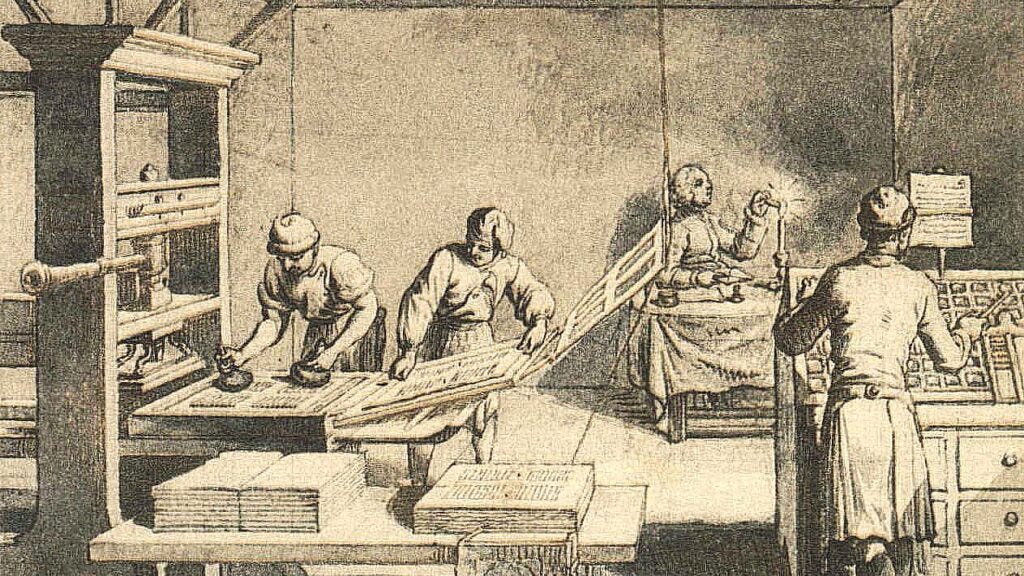
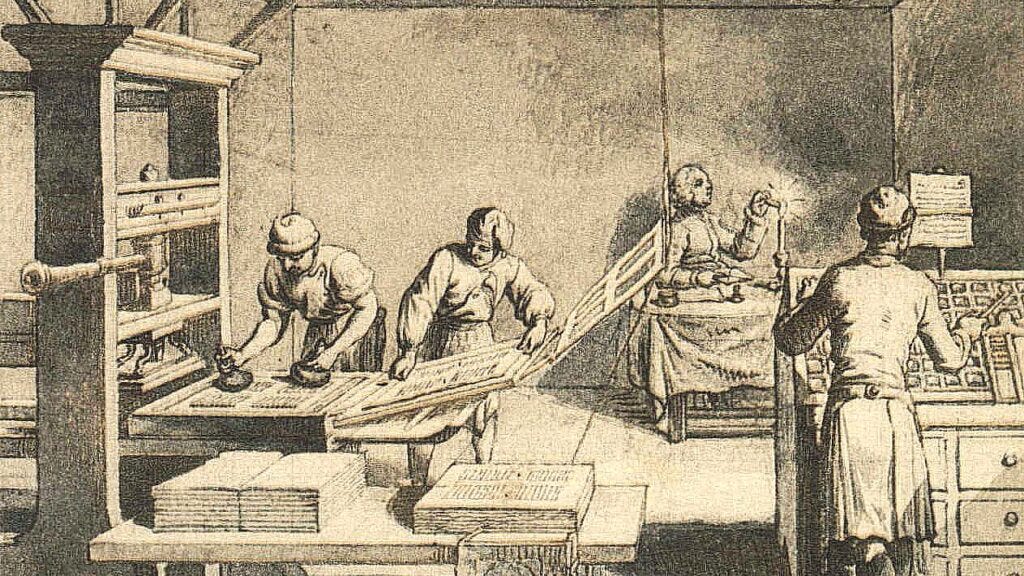
Let’s illustrate this immediately: The story of the calligraphers who opposed the printing press losing against technology, while those who learned to use the press survived, is one of the most frequently used examples. The idea that the world is a better place thanks to increased access to cheaper books and the circulation of information supports the “technology is good” paradigm. People insistently cling to these paradigms and never change their minds.
But I do not believe it is correct to evaluate Artificial Intelligence technologies with the same paradigm. I have two reasons for this. The first is that this triple paradigm is not actually true. The second is that I have begun to think that “the world will not operate as it used to.”
In my opinion, technology is good for its “owners.” When we look at the diffusion process of a new technology, those who develop the idea, the companies that commercialize it, those who hold the infrastructure, and the lobbies that steer regulation take the biggest slice of the profit pie. Especially in the “digital” world, since the scaling of a product or service is minimally dependent on labor or other resources, technology becomes monopolized and does not create a financial return for the broader economy (Platforms, Intellectual Property (IP) rights, licensing, data ownership, etc.).
Technological development can be hindered by international cooperation, state interventions, and legal regulations. The abandonment of nuclear technologies, the banning of Uber and Airbnb services by various countries, censorship practices in autocratic countries, and carbon taxes imposed to prevent climate damage caused by industries are the first examples that come to my mind. Technology is not unstoppable due to its internal dynamics; it is a flow whose direction can be changed—and sometimes blocked—by property structures, political power balances, and legal frameworks.
Technology sometimes creates new jobs. Agricultural machinery left millions unemployed. These millions, of course, found new jobs, but very few of them worked in the production of agricultural machinery. Despite the increase in productivity over the years, the limited increase in employee wages proves to us that those receiving the “added value” are not the employees. This is exactly why the third paradigm is not a neutral summary of historical reality; rather, it is an ideological phrase of consolation that renders the costs paid invisible.
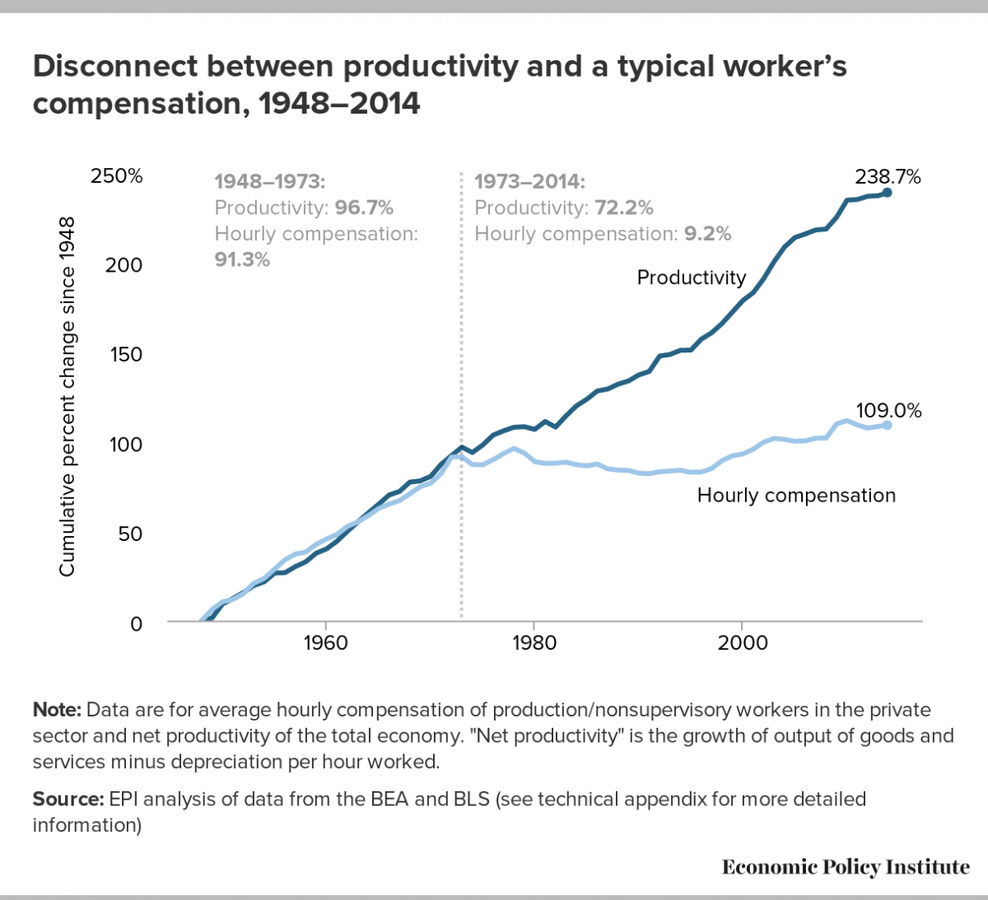
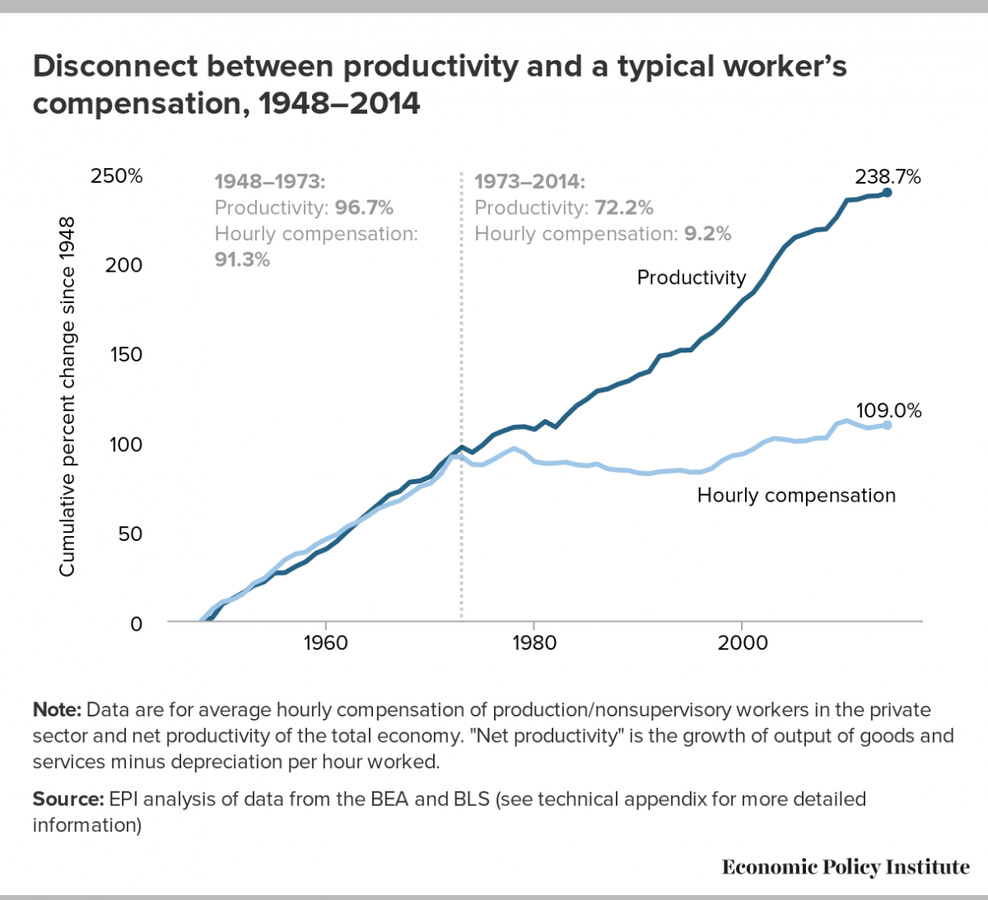
I explained at the very beginning of the article that paradigms are not reality itself. We believe in the idea that “this is reality and this is how things work.” Even though I express contrary views, unfortunately, the “unchanging paradigm” to which everyone has adapted still shapes our today.
If you turn over any stone regarding AI on social media, you will find the three paradigms mentioned above underneath. We may not have changed our paradigm yet, but I believe the world and its mechanics have already changed, and we do not yet possess the clarity to grasp this new paradigm. The reason we cannot foresee the future correctly is that we possess no tools to interpret or make sense of this change.
My views on what will happen and the shifting paradigm are the subject of the next article. Don’t forget to subscribe so you don’t miss out, and share so you don’t feel alone!