

One of the most debated questions about artificial intelligence is whether it stimulates us to think—or whether it makes our thinking muscles weaker. Research has been mixed. One of the most talked-about MIT studies recently claimed AI reduces our capacity to learn and think critically. Yet, with just three groups of 18 people, I personally found the sample size too small to draw sweeping conclusions.
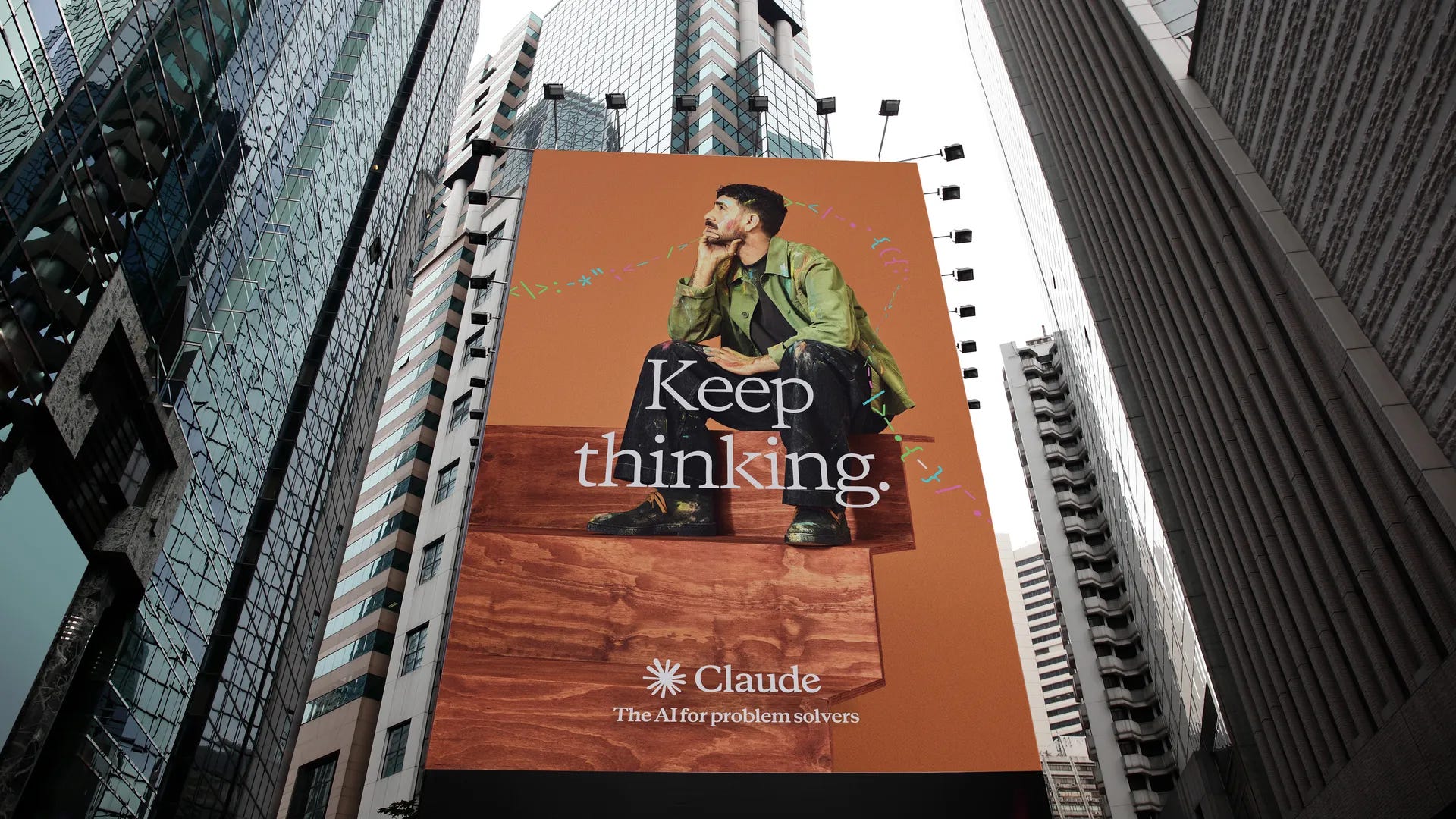
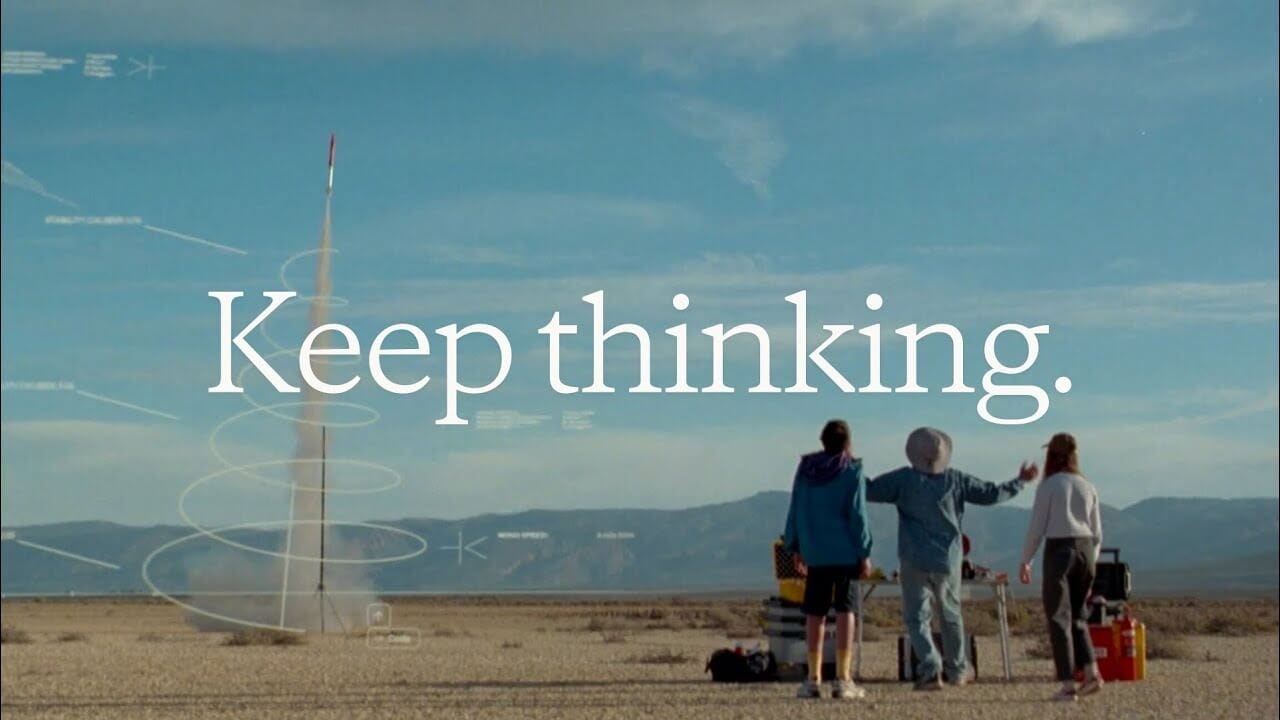
In the middle of this ongoing debate, Anthropic launched its first brand campaign for Claude: Keep Thinking.
Instead of framing AI as a replacement for human thought, the campaign positions it as a partner in problem-solving. Not a “shortcut,” but a “thought partner.”
What the Campaign Says
Anthropic’s message is clear: AI should not replace critical thinking but support it. The ad’s line “There has never been a better time to be a problem solver” underscores the importance of human creativity and reasoning.
Andrew Stirk, Anthropic’s Head of Marketing, frames Claude as more than a tool: “a thought partner for tackling meaningful challenges.”
Here’s a passage from the campaign text:
There has never been a worse time, a worse night, a worse problem. Yet at the same time, there has never been a better moment to face difficulties… Right now, truly, there has never been a better time.
This is a deliberate contrast with Apple’s infamous “Crush” campaign, where instruments and creative tools were literally smashed into a tablet—sparking outrage among artists who saw it as a metaphor for AI replacing human creativity. Apple eventually apologized and pulled the ad.
Why It Matters
Anthropic’s campaign paints an optimistic picture, countering the dystopian narrative that AI inevitably sidelines human thinking. It suggests that AI can amplify our potential rather than diminish it.
As I’ve said from the start, the real issue isn’t the technology itself but how we position and use it. Treat AI as a shortcut, and yes—you risk losing your thinking muscles. Treat it as a thought partner, and perhaps, as Anthropic puts it, we’ll be “problem solvers stronger than ever before.”
So, are we heading for a future where AI frees us to think more deeply—or one where we outsource thinking entirely?
I invite both the dystopians and the utopians into the comments. Let’s see how many of us there are on each side :)