

When I was a child, my father would put me to bed and tell me a story or a fairy tale to put me to sleep. The story I heard the most was "The Boy Who Cried Wolf". The story of the shepherd boy who twice tricked the villagers by falsely alarming them that a wolf had taken the flock for fun, only to have no one believe him when the wolf actually took the flock this time.
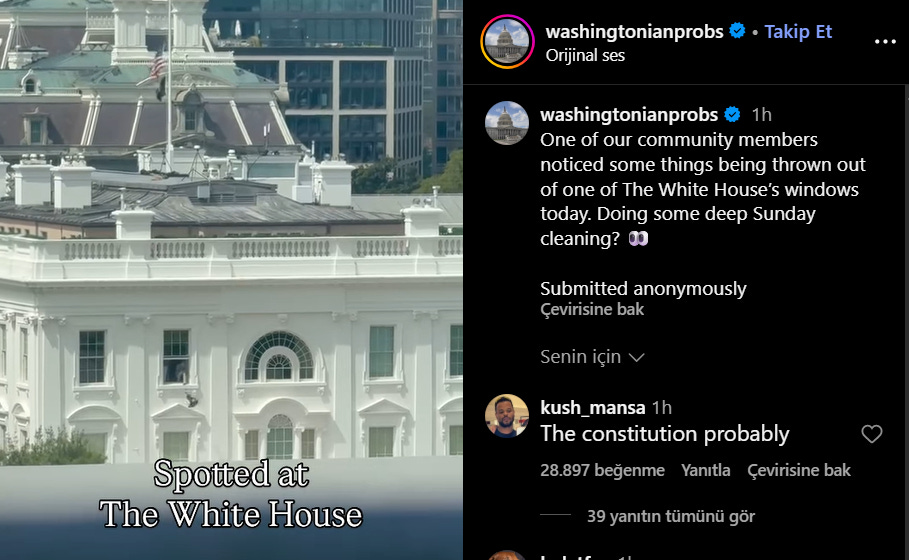
Last week, a video was posted on Twitter (yes, Twitter) showing something being thrown from one of the White House windows into the garden. The video quickly went viral, and while everyone was wondering what it was, White House spokespeople said that it was a routine maintenance operation that took place while the president was away. So far, so normal.
The next day at a press conference, Trump was asked about it. Trump's answer was that the windows in the White House are bulletproof and very heavy, and that's why they don't open. Trump added that his wife even complained about not getting "fresh air" and said that the video was probably AI-generated.
The real fun starts after that :) Because in the rest of his speech, Trump says that when he sees something negative, his way of dealing with it is to blame AI. Then he also mentioned that he had seen a video of himself transforming from a baby growing up, and when he asked who made it, he learned that it was produced by AI.
Although to give back to Caesar what is Caesar's, he mentioned there was a good side too, are we going to blame AI for videos that we do not like? As we criticize AI Slop contents that we criticize for trashing the internet, will all content that is real but we find ridiculous be stigmatized in this way? As we have seen in Trump's example, we are increasingly losing our critical thinking muscles by saying "AI did it" and absolving ourselves of responsibility.
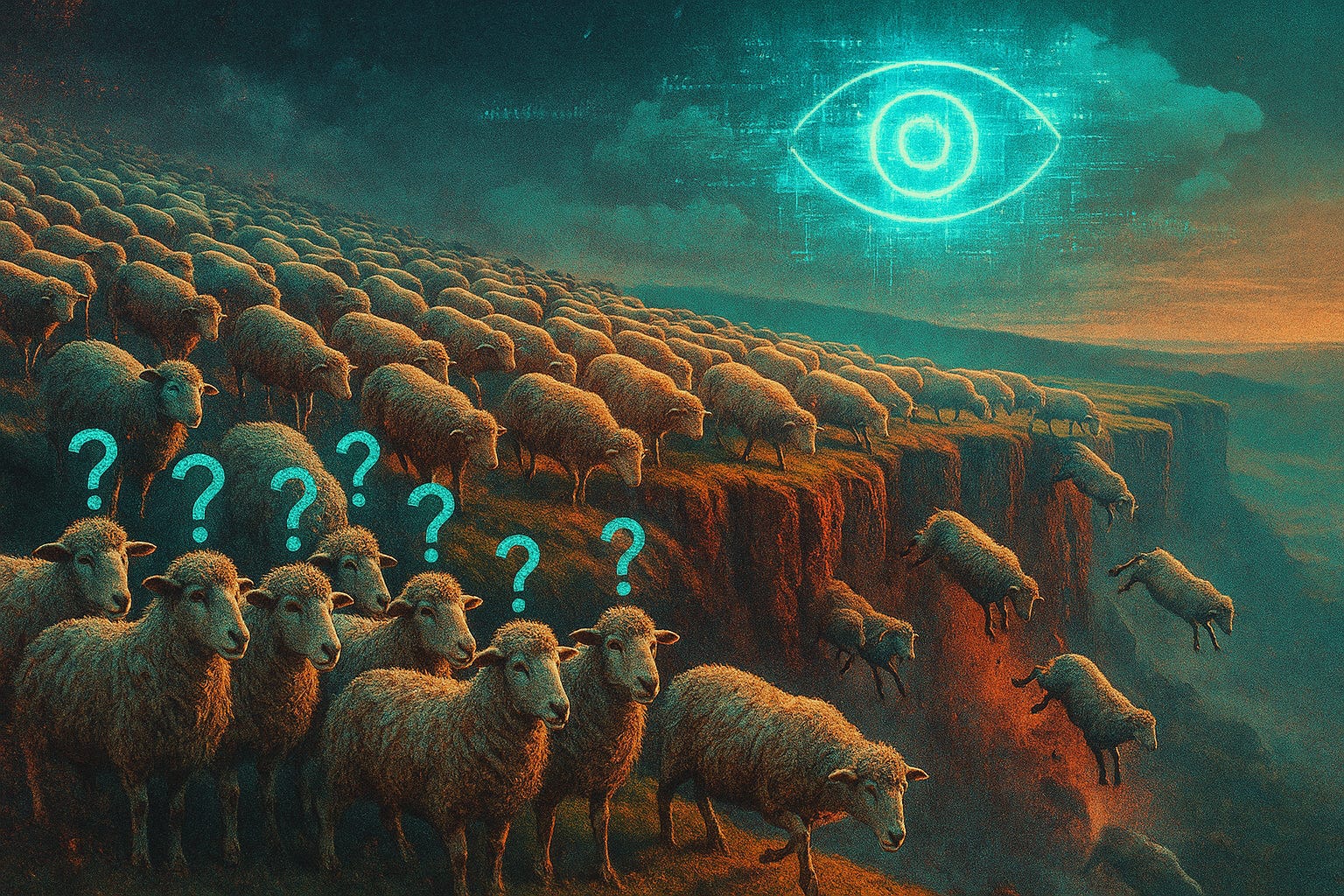
Just a few days ago, I read the news that 333 sheep followed one sheep and rolled off a cliff. The shepherd boy in the tale consumed the trust of the villagers, while the sheep follow each other off the cliff without questioning. Today, our attitude towards AI is like a combination of these two behaviors. We both lose trust and behave with herd psychology without questioning. This is not only an individual illusion, but if organizations continue to blame AI, our reflexes will atrophy. Because of this blindness, when the first real danger comes, it can drag everyone from individuals to institutions and even societies into the abyss.
Even if AI is not the lying shepherd boy, perhaps the real danger is that we are already ready to roll off a cliff like the herd.