

We all live with a quiet worry. Software developers feel it. People who work at a desk feel it too. The question is always the same: “Will AI take my job?”
The software world is like the canary in the coal mine. In the past, British miners took a canary down into the mine. They had no gas detectors. When the bird went quiet, there was poison gas in the air. It was time to run. Today we use this saying for the first group that feels a danger. We see the bad effects of AI first.
But there is a chance here too. The point is not to give all our work to algorithms. The point is to change the way we work. We need a new way of thinking. Its name is the AI Sandwich.
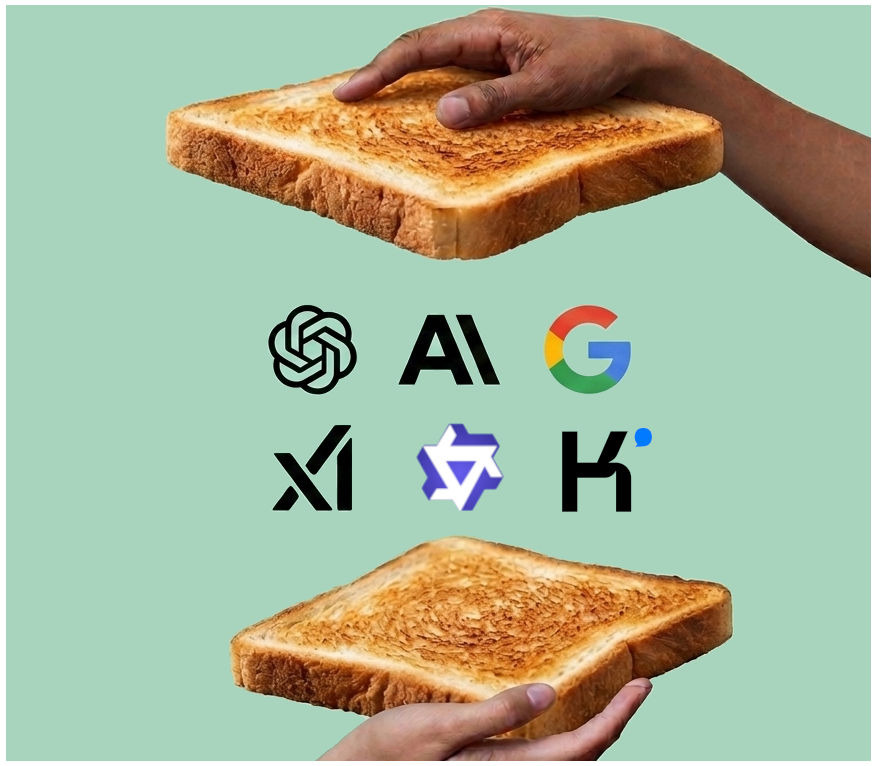
The New Place of the Human: The Start and the End
Kieran Klaassen created the idea of Compound Engineering. He also made this sandwich metaphor. It shows how we can work together with AI. The outside layers, the bread that holds the sandwich together, are human. Everything inside is AI.
At the start, a human decides what to do. A human draws the big picture and chooses the direction. At the end, a human checks the product, makes it better and gives it a soul. AI is the filling. It does the heavy work between these two human touches.
“People are the bread of the sandwich, and AI is in the middle. AI is everything you put inside your sandwich.”
This model is not only for people like us who write code. It also works for designers, strategists and content creators. If you want a product to be really yours, you must be there at the beginning and at the end.
The End of the “Doing” Layer
In the old way, we used 80 percent of our time to do the work itself. We wrote code. We made drafts. We cleaned data. Let’s be honest. This layer is finished now. I think we agree on this. Language models can follow difficult plans for hours, even for days, without mistakes.
So we all move from worker to manager or architect. We should not get lost in the small technical details in the middle. We should lead the process. While AI does the plan, we save our minds for the big decisions.
Changing the Frame
AI stays inside a small frame. What is the human skill that goes above it? Imagine your back hurts. AI will offer you a painkiller very quickly. The medicine stops the pain, but it does not solve the problem. AI cannot change the frame and look from a higher level. Maybe the problem is not your back. Maybe it is the chair you sit on all day. Maybe you need a new bed. Maybe you need to go for a walk.
AI works perfectly inside the task you give it. But someone must decide which problem is worth solving. Someone must decide how to look at that problem. This is a completely human skill. Human skill is not finding the right answer any more. It is asking the right question and drawing the frame.
Taste: The Limit of AI
The biggest problem with AI output is that it is ordinary. Everything looks the same. Nothing feels like yours.
Kieran comes from classical music, and he says something interesting. You can practise a piece a hundred times, but this is mechanical work. When you play it on a stage and add feeling to it, the work becomes art.
“If you want something to be yours, it must come from you, or it must connect to you in some way.”
Your taste and your love of small details make a product different from the standard one. AI makes everything the same. That last touch, the moment when you say “this feels good”, is the only thing that is still different.
A Shared Brain That Learns From Mistakes
Do not use AI like a tool for one job only. Think of it as a colleague that gets better with time. In Compound Engineering there is one key step: the system writes down everything it learns. Then AI does not make the same mistake again. A memory grows together with you. A shared brain.
The process is a circle:
Plan: Describe the problem, draw the frame, build the strategy.
Do: Give the work to AI and let it finish the job.
Review: Test the output, add your own touch, check how it feels.
Collect: Write the mistakes and the lessons into the system memory. Make its intelligence permanent.
From Typing Speed to Thinking Speed
Operators who sit at a keyboard for hours are going away. Creative managers who turn their ideas into real things are coming. We are moving from writing speed to thinking speed.
AI has filled the middle of the sandwich. The filling gets cheaper, faster and better every day. But it is still your job to turn it into a sandwich:
Which question you ask. How you draw the frame. How you look at the output. How you collect what you learn. The character of the sandwich comes from these things.
Ordinary, or truly yours. This is completely up to you.