

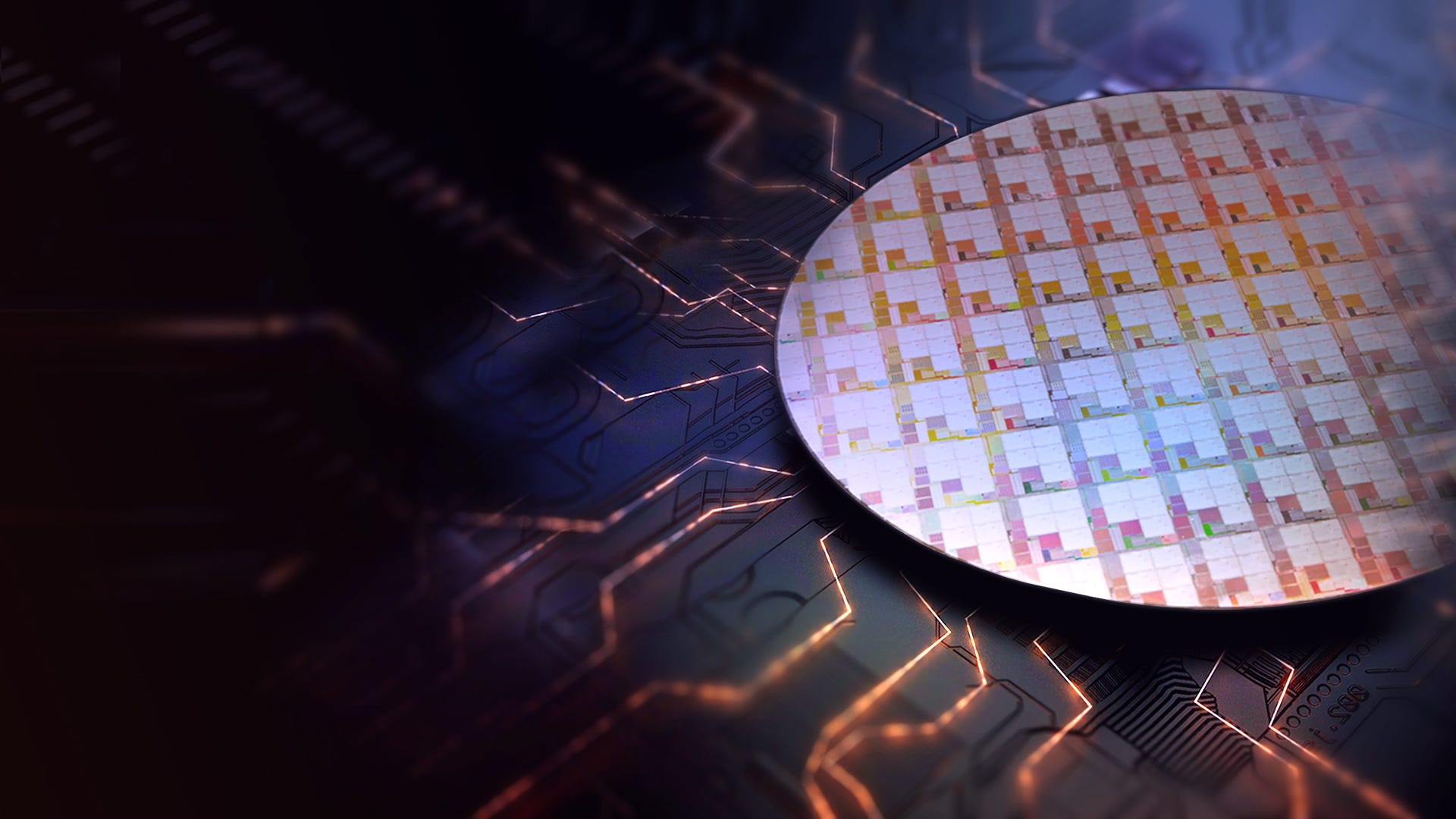
In today’s world, semiconductor circuits, or chips, are the heart of technology. They are not only the basis of high-tech products but also the foundation of the simplest devices in our daily lives. Without these small miracles used in about 170 different sectors, it is clearly impossible for modern industry to work. During the COVID-19 pandemic supply crisis, we saw that chip production has become a vital national security and economic independence issue for countries. The most striking and current proof of this situation is the international tension around the Dutch chip producer Nexperia.
The Importance of Simple Chips
Nexperia is a chip producer based in the Netherlands. However, in 2019, the Chinese company Wingtech Technology bought most of its shares, so it came under Chinese control. The company produces relatively low-end chips used for consumer electronics, automotive, and industrial applications. But as we saw during the COVID-19 pandemic, these chips are very important even though they are categorized as “low technology.” For example, hundreds of power chips are used in a car, from brake lights to side mirrors. Without these small and low-tech chips, production cannot happen.
Actually, Nexperia was caught in the middle of the US’s increasing pressure on China in the technology area. In December 2024, the US put Wingtech on the “Black List.” After pressure from Washington, the Dutch government took action. They were worried that Nexperia might face export restrictions because the Chinese firm was on the list and Nexperia is 100% owned by Wingtech.
The Netherlands’ Choice
In October 2025, the Dutch government took control of Nexperia’s operations. They said there were “serious management problems and signs of them” that threatened the company’s knowledge and production capacity for critical technologies in Europe. The government’s step also included worries that the company would move chip production from Europe to China. Also, according to claims in court documents, Chinese CEO Zhang Xuezheng wanted to use Nexperia’s financial resources to fund another company called WingSkySemi that had financial problems. He asked for orders worth $200 million that probably could never be used, instead of the $70-80 million wafer order the company needed.
This geopolitical crisis spread quickly. China brought an export ban on Nexperia products as retaliation. This situation put the European automotive industry (including companies like VW, BMW, Mercedes) in a difficult position. German automotive supplier Bosch started to think about sending its workers at the Salzgitter facility on unpaid leave because of problems in the supply chain. This example shows the critical role of even the simplest chips in the global supply chain and how one country’s decision can cause an economic crisis across the whole continent.
A Global Paradigm Shift
Chip production started in 1947 with the invention of the transistor, the biggest technological revolution of the 20th century. This opened the way for all modern technologies like electronics, software, artificial intelligence, and aviation. For decades, the global order was based on the idea “design in the West, produce in the East.” However, supply chain problems during the COVID-19 pandemic caused production to stop, especially in the automotive sector. This taught us “production must be in my hands” as a new paradigm.
Today, the US is trying to bring chip production to its own land with a $52 billion incentive package. As I mentioned in previous articles, it even chose to become a direct partner in critical companies like Intel on this issue.
So, Where Does Turkey Stand in This Strategic Race?
Actually, Turkey could have had a say in this field with its first steps in the early 1980s. Our scientists succeeded in 100-nanometer chip design in the early 1980s. Testaş (Turkey Electronics Industry Trade Inc.) was established in 1976 and the foundation of a chip factory was laid. When we think that TSMC in Taiwan (which alone makes 53% of world production) was founded in 1987 and Samsung in 1983, we can better understand how early and critical Turkey’s first attempt in this field was.
But unfortunately, the project could not continue because of government changes and the lack of visionary managers. The Testaş facilities in Aydın closed in 1997, and later the entire production facility was scrapped.
Turkey’s Necessary Route: Start Production Immediately
Today, the chip industry in Turkey is limited to ODTÜ MEMS (which produces 500 nm and above) and designs developed in technoparks for the defense industry. But this situation must change.
If we look at current projects: A 65 nm chip production facility is planned with cooperation between TÜBİTAK BİLGEM and Qatar’s Hamad Bin Khalifa University. Although this technology (65 nm was used between 2007-2010) is old, it can meet 60-80% of our country’s needs (automotive, white goods, etc.). On the private sector side, companies like Yongatek, Ermaksan, Yital, Aselsan Bilkent Micro Nano Inc. are trying to design and produce chips in different technologies.
Let’s not forget that the Nexperia crisis shows us again how essential even the simplest and lowest-cost semiconductors are for a country’s supply chain. We constantly see that wars are no longer won only with armies. Even if we start today, it will take years to have efficient businesses. Turkey must see chip production as one of its most important economic investments to guarantee its independence and economic security. Our digital future is hidden in the small surfaces of chips. We cannot completely give up this race where we are late. We must run and catch up.