

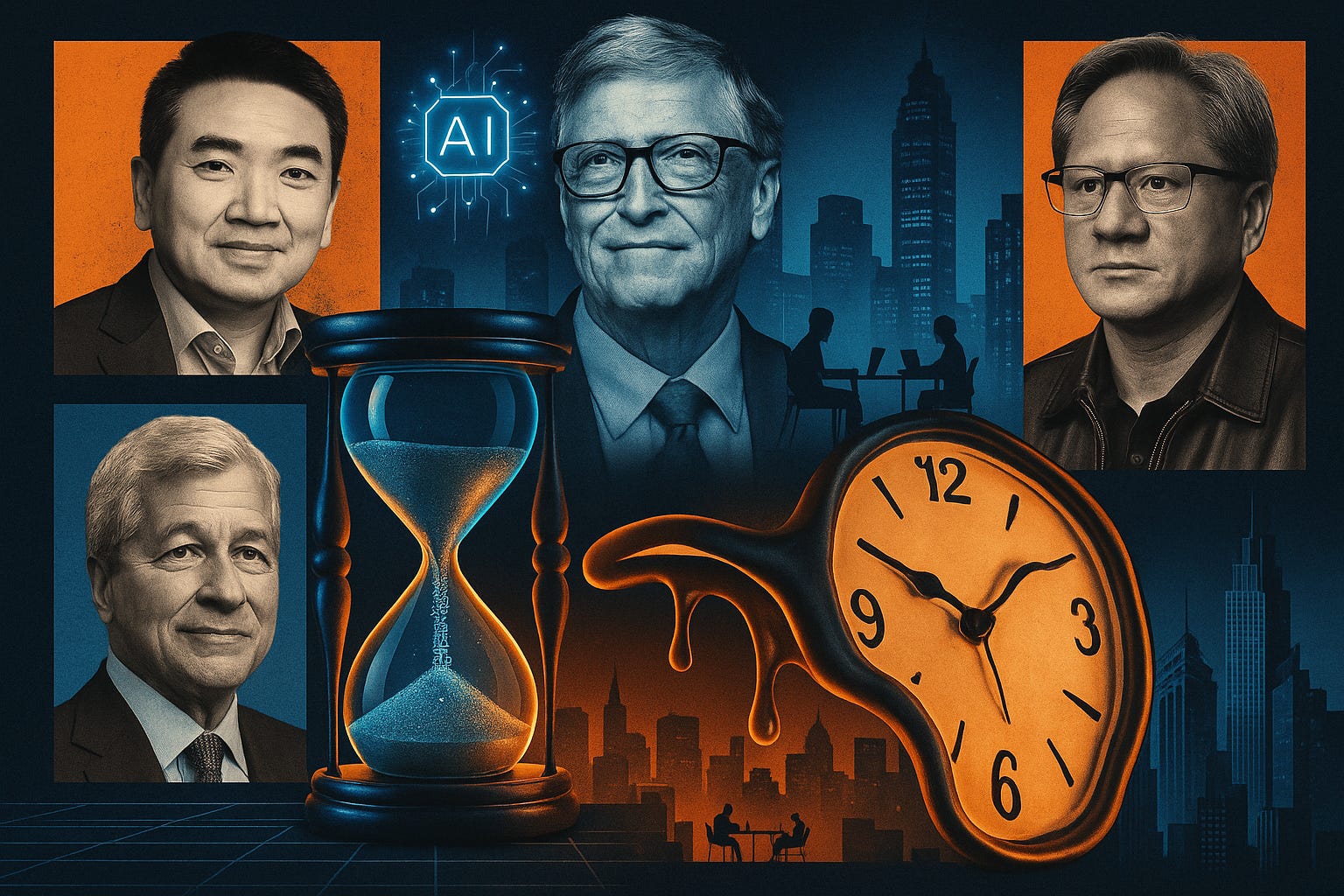
Zoom CEO Eric Yuan recently put forward an ambitious vision: thanks to productivity gains from artificial intelligence, a three-day workweek may soon be possible. And it’s not just Yuan. Leaders like Bill Gates, Jamie Dimon, and Nvidia CEO Jensen Huang also believe that the AI revolution will fundamentally reshape business and bring shorter workweeks into our lives.
In Türkiye, however, rumors recently circulated that “a four-day workweek will be included in the medium-term program.” The Directorate of Communications quickly denied these claims. In other words, while the global vision is being discussed, it’s clear that Türkiye has yet to take any official steps.
Leaders’ Vision: A Shorter Workweek
Eric Yuan argues that AI-powered digital assistants will reduce people’s workloads, making three- or four-day workweeks the norm. Bill Gates predicts that within the next decade, humans “won’t be necessary for most things.” JPMorgan CEO Jamie Dimon even envisions 3.5-day weeks in industries like finance, long known for grueling hours. Nvidia’s Jensen Huang says four-day workweeks may arrive sooner than expected, once AI spreads across industries.
How Could It Happen?
Countries like Iceland and Belgium have already experimented with four-day workweeks. In the U.S., executives are increasingly open to the idea. A 2025 report by Tech.co shows that 38% of senior executives support this model (up from 23% last year). But this raises another question: is AI truly delivering productivity gains, or just making us feel more efficient?
The Other Side of the Coin: Job Losses and New Roles
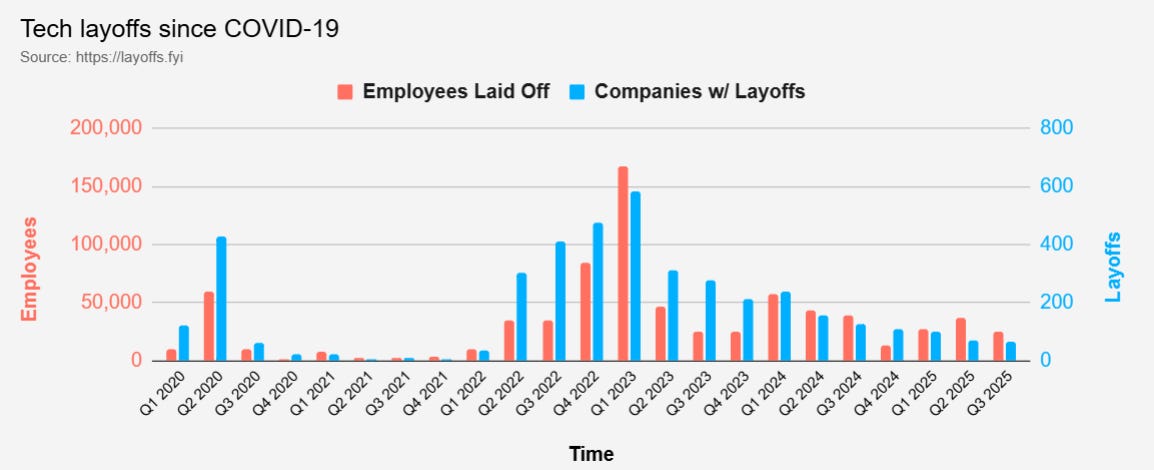
Eric Yuan openly admits that some jobs will inevitably disappear. Entry-level roles- like junior engineers - are at particular risk as AI takes over coding and other routine tasks. The tech world has already felt this disruption since 2023. According to layoffs.fyi, about 89,000 people have been laid off across 199 companies in 2025 alone.
Interestingly, the same site’s data shows that layoffs peaked in 2022-2023, when companies were still carrying the weight of the pandemic. Since AI became more visible in our daily work, layoffs have been on a downward trend.
Why? Because disruption also creates opportunity. As old jobs disappear, new roles are emerging: managing, supervising, and optimizing AI systems. As Jensen Huang puts it: humans won’t be replaced by AI itself, but by people who can harness AI effectively.
Reality Check for Türkiye
While global leaders’ visions are inspiring, Türkiye’s official denial reminds us that for now, such ideas remain “utopian.” Here, the four-day workweek is more of a headline than a reality, requiring major economic and social transformation before it can be implemented.
Conclusion: More Than a Dream
The idea of working just three days a week may sound utopian at first. But history shows that technological leaps often begin as utopias before becoming part of everyday life. Technology comes first; society follows and adapts. If AI can truly prove its productivity gains, and if institutions adapt, then perhaps the greatest gift of the next decade could be “time” itself.
It’s not about the technology - it’s about how we adapt to it. Used wisely, AI could give us back what money can’t easily buy: time. And that possibility excites me.
But here’s the real question: if you had that extra time, how would you use it? Would we become more creative and free individuals - or would we waste it, stuck in the same cycles we already know?