

It was 2021. The world was complaining about the toxic environment created by a social media giant full of scandals called Facebook. Facebook was trying to breathe under constant criticism. At exactly this time, when you wouldn’t want to introduce a new brand, Mark Zuckerberg, an engineering genius (or as some critics say, “someone who talks like a person with antisocial personality disorder”), made the most expensive bet in history: He changed the company’s name to Meta.
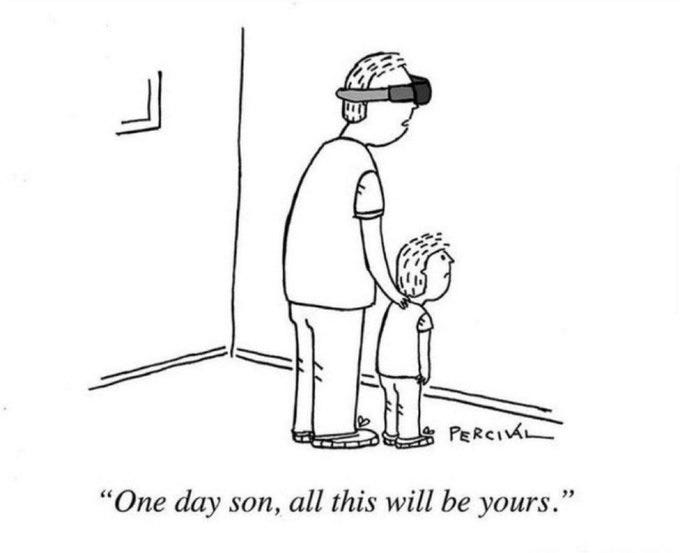
This wasn’t an identity crisis - it was a signal for the future. Or at least, it was the strangest way to escape from the burden on the current brand. Zuckerberg announced that, unlike the founders of Google’s parent company Alphabet, he didn’t plan to leave his seat, and he was moving the company from being “Facebook first” to being “metaverse first.”
A Billion-Dollar Sandbox
So what was this great vision? According to a leaked document from 2018, the vision was simple: A digital universe where users would walk around with virtual ads and purchased virtual products - a kind of 3D, completely immersive internet version of the dreams we see. They even imagined that users would spend as little time as possible in the real world. For this experience that was expected to create shock and awe, Zuckerberg spent at least 10 billion dollars in 2021 alone. So a much more expensive Afterlife was being built. And this was just the beginning.
Technical Challenges
While Meta is building this digital world through its virtual reality headsets Quest and its platform called Horizon, it runs all metaverse operations through a department called Reality Labs. According to the company’s financial reports, this department reports huge expenses. These massive expenses, technically called “losses,” were actually named “long-term investments.” For example, in just the fourth quarter of 2024, Reality Labs spent 6.05 billion dollars and reported a “loss” of 4.967 billion dollars. The company’s CFO said he expects these losses to increase even more in 2025. So while the company continues to work on the virtual world, it continues to write billions of dollars in losses every quarter because there are technical challenges that need to be overcome to bring the very large and scalable consumer products to the market.
The Short and Bright Life of NFTs
During the same period when the metaverse craze peaked, another digital area where financial sense was completely abandoned rose: NFTs (non-fungible tokens).
In 2021, people went absolutely crazy for these assets, which are digital ownership certificates. The pioneer of the NFT explosion was digital artist Beeple (Mike Winkelmann). The artist sold his collage called Everydays: The First 5000 Days at Christie’s auction for 69 million dollars. This sale placed him among the top three most valuable living artists. 69 million dollars! Just for a JPEG. Although buyers usually had limited rights to display the work, they were essentially just buying “bragging rights.” Zuckerberg also truly believed that crypto technologies like NFTs and smart contracts would play an important role in the metaverse.
But guess what happened? The bubble burst quietly, unlike the dollars Meta spent on Reality Labs.
According to a report published in September 2023, 95% of the 73,257 NFT collections examined had a market value of zero Ether (ETH). So the revolutionary digital assets of the past became largely worthless souvenirs. This meant that 23 million investors had tokens with no practical value or use. I think you can also brag about such a big loss. Not everyone will be so lucky.
A Virtual Future Buried in Silence
The deflation of the NFT bubble paralleled the decline in popularity of the metaverse concept. The word “metaverse,” once called “the future of the internet” and on everyone’s lips, became less and less heard day by day.
However, Meta is making great efforts to overcome this silence by focusing on AR glasses (Nazaré) and wearable technologies. In fact, about half of Reality Labs spending is expected to be allocated for these “Wearables” in 2025.
So where is the huge, immersive 3D “shock and awe” metaverse that Mark Zuckerberg talked about in his first vision? For example, today Meta talks about NFTs being just event tickets or in-game items. A careful rebuilding process has replaced the old ambition. Because Zuckerberg’s metaverse hasn’t yet been successful in attracting users made of flesh and bone, who pay taxes and are tired of social media, to its digital realm.
Are You Scared?
However, this should also be added: Meta still continues to burn money and sees that losses will increase even in 2026. As stated in the 50-page document titled “The Metaverse” written in 2018 by Jason Rubin, the Oculus executive who led Meta’s transformation, “if building the metaverse we decided to build doesn’t scare us to death, then this is not the metaverse we should build.” This metaverse didn’t scare us much either. But maybe the version they are still working on can scare both them and us.
See you in the next artic