

I don't want to be one of those people in the cartoons that AI will punish for not saying "please" when the time comes, but not a day goes by that a new AI application does not lead to a new ethical debate.
With Google's announcement of the Try It On feature last week, the debate about AI scanning our bodies and adding them to its database has flared up. There is also the rumor of AI hypothetically adding features that does not come with the scanning, while presenting how the clothes will look on us.
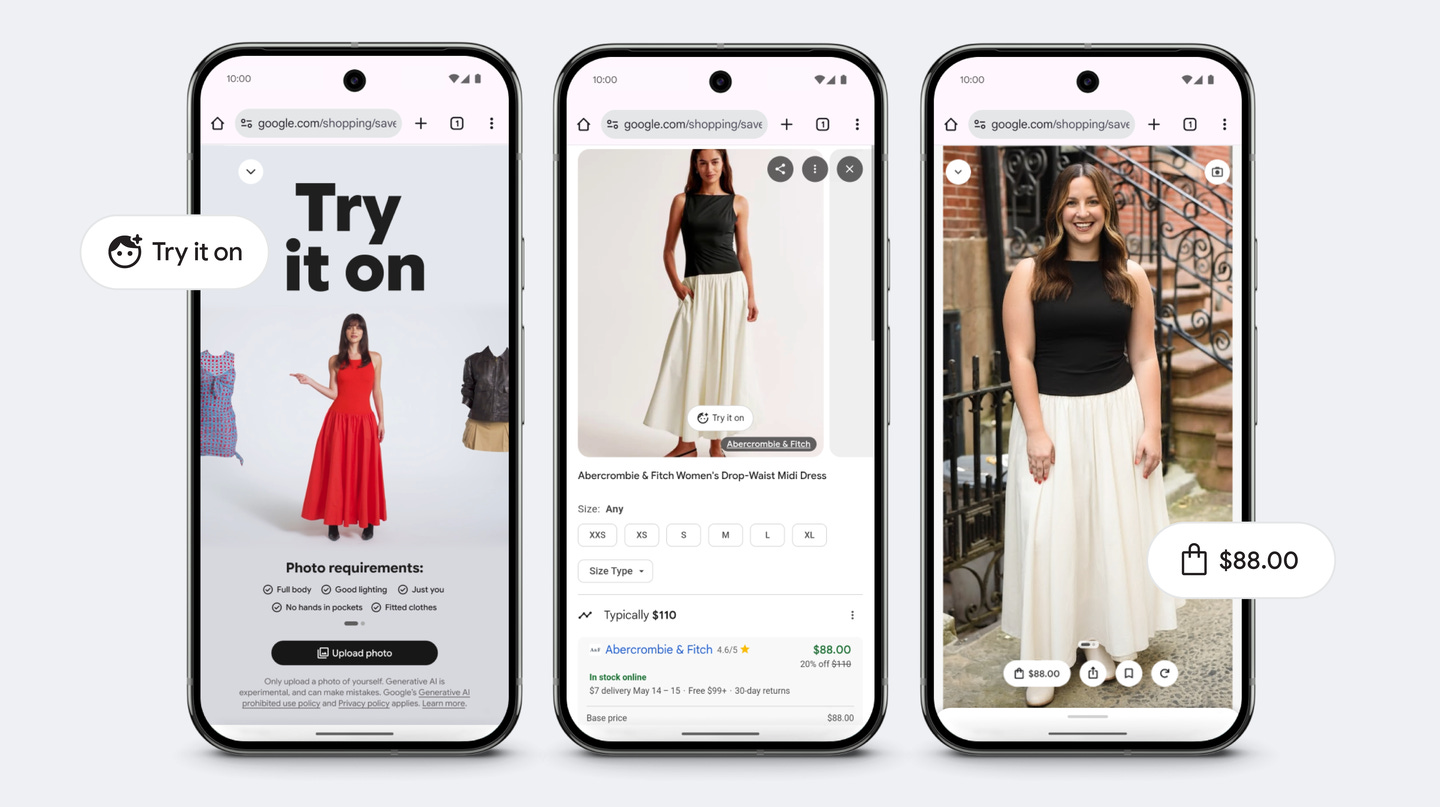
Source: https://blog.google/products/shopping/how-to-use-google-shopping-try-it-on/
Allegations, Reactions and Ethical Concerns
In this feature, which is not yet available in Türkiye, there have been allegations that when you try to dress men in clothes, their chest and leg hairs are removed and their chest size changes, and that users who upload their own youth photos have observed changes in their body contours towards adulthood. Different users who have investigated these allegations have confirmed this, although they declined to provide us with the evidence. Therefore, negative user feedback stating that accessories that they would not wear, such as belts or necklaces, were added against their will, pales in comparison to these claims.
Google stated that it has taken "strong protection measures". They reported that sensitive clothing categories (such as underwear and beachwear) is not allowed and clearly identifiable images of children have been blocked from being uploaded.
New Playground for the Retail World
The Try It On feature is marketed to retailers in a way that will both increase sales with online trial experience and reduce return rates. It is even said to prevent wastage of resources in packaging and logistics. But is Try It On just a retail technology or a new debate that touches our identity?
What about tomorrow?
With this feature, many questions popped up in my head:
Will celebrities in advertising campaigns start to adorn billboards with the Try It On feature?
How will the discussions revolving around men and women be received by LGBTQ+ individuals and how will Google offer solutions for these individuals in general body type assumptions?
Which celebrities or superheroes will we see in which outfits when this feature, which is only available in the US for now, becomes available in Türkiye?
What I am sure of right now is that trying on costumes virtually might be quite popular next Halloween, especially in the US. This new reality unfortunately requires us to rethink our attitude towards technology. Are you ready to surrender to these technologies in your daily life?