

Of course, I’m not talking about the kind of constipation that first comes to mind. Ever since artificial intelligence began taking over our world, the promises were clear: speed, efficiency, and scale. At first glance, looking at posts and articles, it seems to have delivered on all of them. But has it really?
Or are we caught up in a hype cycle, missing what we should really be paying attention to? According to MIT Labs, 95% of companies have failed to see measurable returns from their AI investments. HBR refers to this as “workslop” — content that appears to be complete but is essentially empty.
Marketoonist goes further with the term “AI slop fatigue”, meaning the clogging of digital feeds, from LinkedIn to TikTok, with low-quality AI-generated output.
The common thread across all these concepts is blockage. But is this just something invented by those who are afraid that AI will take their jobs, or is it another trap set by outside forces? Let’s see…
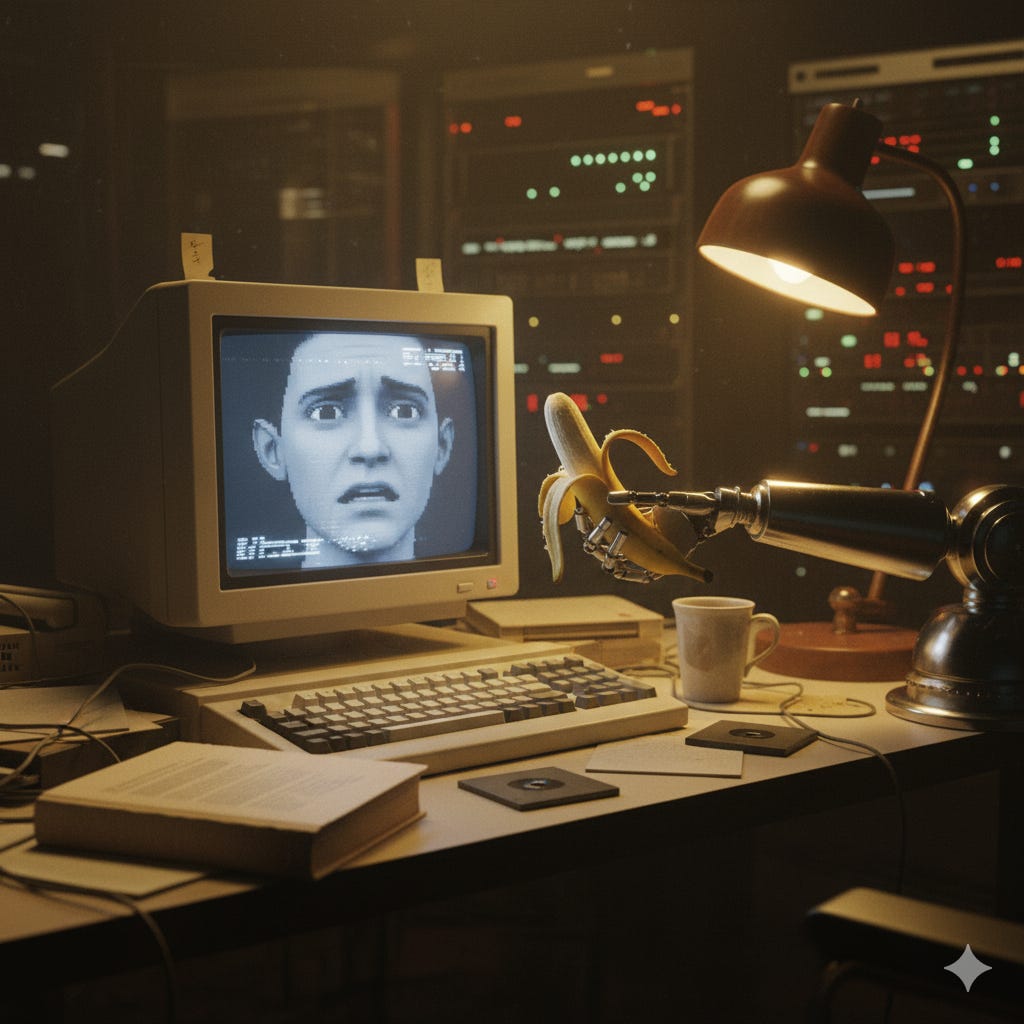
The Illusion of Productivity
Reports, emails, and presentations generated by AI often look professional at first glance. But dig deeper, and you find content that is incomplete, shallow, or disconnected from context. Instead of pushing work forward, it adds a new layer of work.
According to an HBR study, employees spend nearly two hours on average dealing with this type of content. Beyond the invisible costs and lost time, the damage goes further.
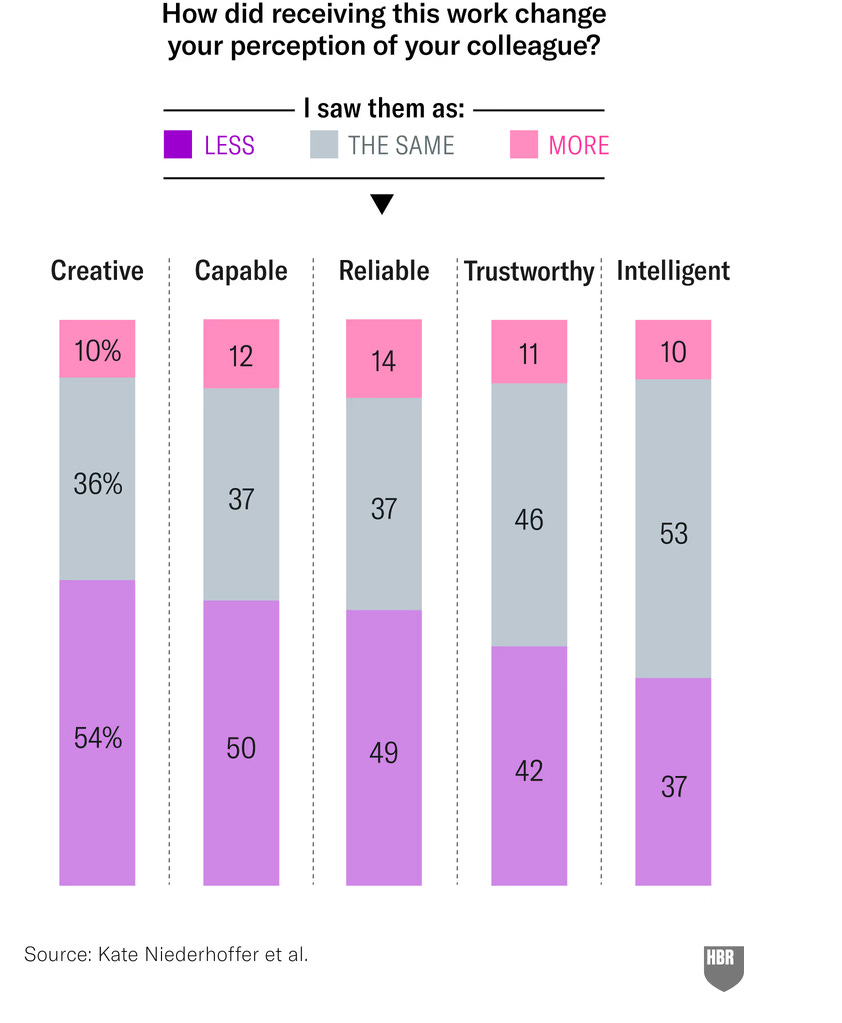
It erodes collaboration. Data shows that colleagues receiving “workslop” rate the sender as 53% less creative, 42% less trustworthy, and 37% less intelligent. So not only does poor output slow down work, it changes how people perceive each other.
In effect, employees end up doing their own jobs while also covering what someone else left unfinished. For a company with ten thousand employees, the annual loss could run into millions. Yet you won’t find this loss in spreadsheets. Can the invisible still be counted as a loss? That’s up to companies to answer. But from this perspective, what looks like productivity gains from AI might actually be serious hidden costs.
Content Inflation
Every day, our screens are flooded with hundreds of pieces of content. Long academic-style posts on LinkedIn, repetitive clips on TikTok, templated videos on YouTube… According to WIRED, more than half of this flow is now AI-generated. Initially attractive, this abundance eventually turns into exhaustion.
The human mind craves variety but rejects repetition. When users don’t find real thought or emotion in what they see, they just scroll past. That’s where the concept of “slop fatigue” takes hold. As content velocity increases, trust decreases.
Brands are noticing, too. Polaroid’s “AI can’t generate sand” slogan or BMW’s “authenticity is the new disruption” campaign are reactions to this fatigue. The question is: will brands produce more to stay visible, or focus on fewer, higher-quality pieces that actually stick?
Trapped Between Real and Artificial
Think about the visuals you see on social media. Which are real, which are AI-generated? Every new AI tool inches closer to reality, making the line harder to spot.
Our online world is increasingly made of shadows of the real. For those constantly exposed, the risk is a distorted relationship with reality. People lose the ability to trust what they see and end up drifting in uncertainty.
For brands, this is critical. Trust is the most fragile element of the relationship between people and brands. People crave the real. If they also get lost in uncertainty within brand content, they’ll look elsewhere to satisfy their hunger for authenticity. All of this suggests one thing: audiences need content touched by genuine human effort.
Is the Cure for Constipation Analog Intelligence?
Ann Handley prescribes “Analog Intelligence” as the cure for this constipation. She argues that the most valuable part of creativity often hides in what seems unproductive: daydreaming, doodling on the corner of a notebook, debating the placement of a comma. Compared to fast content production, these moments look like wasted time — but they actually strengthen the muscles of thought.
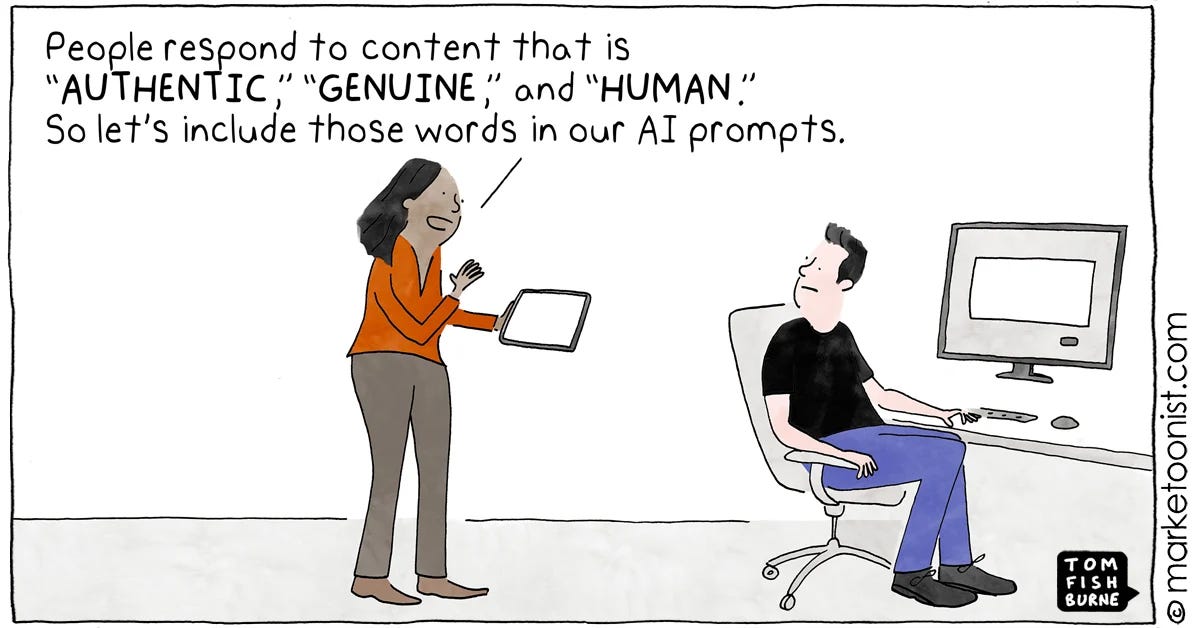
Before the cure, there’s the diagnosis: “thoughtstipation.” When AI enters the process too early, this natural exploration stage disappears. The result? Quickly generated, hollow content. Over time, people stop hearing their own voice and hand over their thinking to AI. Intellectual independence erodes.
Analog intelligence is presented here as an exit route. It’s about giving space to one’s own thought process — messy, but productive. The balance is clear: human thought first, AI second. When AI supports thinking, it accelerates flow. When it replaces thinking, it causes constipation.
Willpower in Productivity
The real differentiator in AI use is not technical skill but attitude. Two people can use the same tool and get completely different results. The line is simple: those who outsource responsibility, and those who enhance productivity.
The outsourcers treat AI like an escape ramp. Without putting in their own thought, they delegate the entire job. The output looks shiny on the surface, but falls apart on inspection. The cost? Lost trust, misunderstandings, duplicated effort.
The enhancers, on the other hand, treat AI as a tool to accelerate their work. For them, AI is a source that feeds their ideas and supports their production. Their outputs are shaped around their own thinking.
When AI replaces thought, constipation begins. The solution is simple. One option, as my friend Burak jokes, is to ban AI outright — a hard and final solution :)) Another is to make AI a complement to what we do. In that case, instead of blocking our thoughts, it becomes a force that organizes them.