

Saying this during the AI era is quite risky. We deal with daily, even hourly “hype.” How do you feel when you look away from your computer or phone for a while and come back to see new tools, models, and concepts? Do you also have FOMO (Fear of Missing Out) like me?
We’ve talked many times about how AI has started to take over technical tasks and is almost finishing them. Coding, creating visual or audio materials, even video production... Now it can do all of these at very low cost with acceptable quality. But what has it contributed to our productivity?
It seems that at the end of the day, it’s close to zero. Yes, saying zero would be unfair. But for most of us, the output we produce in a certain period hasn’t changed. We need to look at this not on an hourly or daily basis, but over a wider time period (for example, monthly).
Money Flows Like Water
Last week at the Davos Economic Forum meeting with world leaders, after the new world Trump created, the most important topic was artificial intelligence. We also summarized the technology topics at Davos. If you haven’t read it, let me take you there. Like a summary of the summary, everyone now accepts that this is not a bubble. In 2025, about 50% of global venture capital (VC) investments went to AI-focused startups. So almost $250 billion in capital moved to this area in 2025 alone. What changed in our lives from this much investment in a single calendar year? Nothing significant in terms of productivity.
A study done in mid-2025 gave interesting results. According to research with a group of developers, when these developers used AI tools, it was noticed that completing their tasks took 19% longer. This is really surprising. But the real surprise is this: when the same developers were verbally asked how much AI made them faster, they said it made them 20% faster. Actually, the issue is very simple: being productive and feeling productive are different things.
Perfect AI
We think AI tools are truly perfect. But we still can’t say they’re fully mature. They still need human control at the final point. Especially in complex work and projects, leaving all responsibility to AI is very risky. In such situations, the time spent cleaning up at the end becomes close to a human doing the entire job.
“Vibe coding,” which is still popular in the coding field, is actually an example of this. Everyone thinks that an AI tool where we explain our needs and wishes like talking will produce perfect work. Unfortunately, help has been requested many times on this topic. Yes, AI can do this, but if you don’t understand what it’s doing, what follows is a complete swamp. The more you struggle, the more you’ll sink.
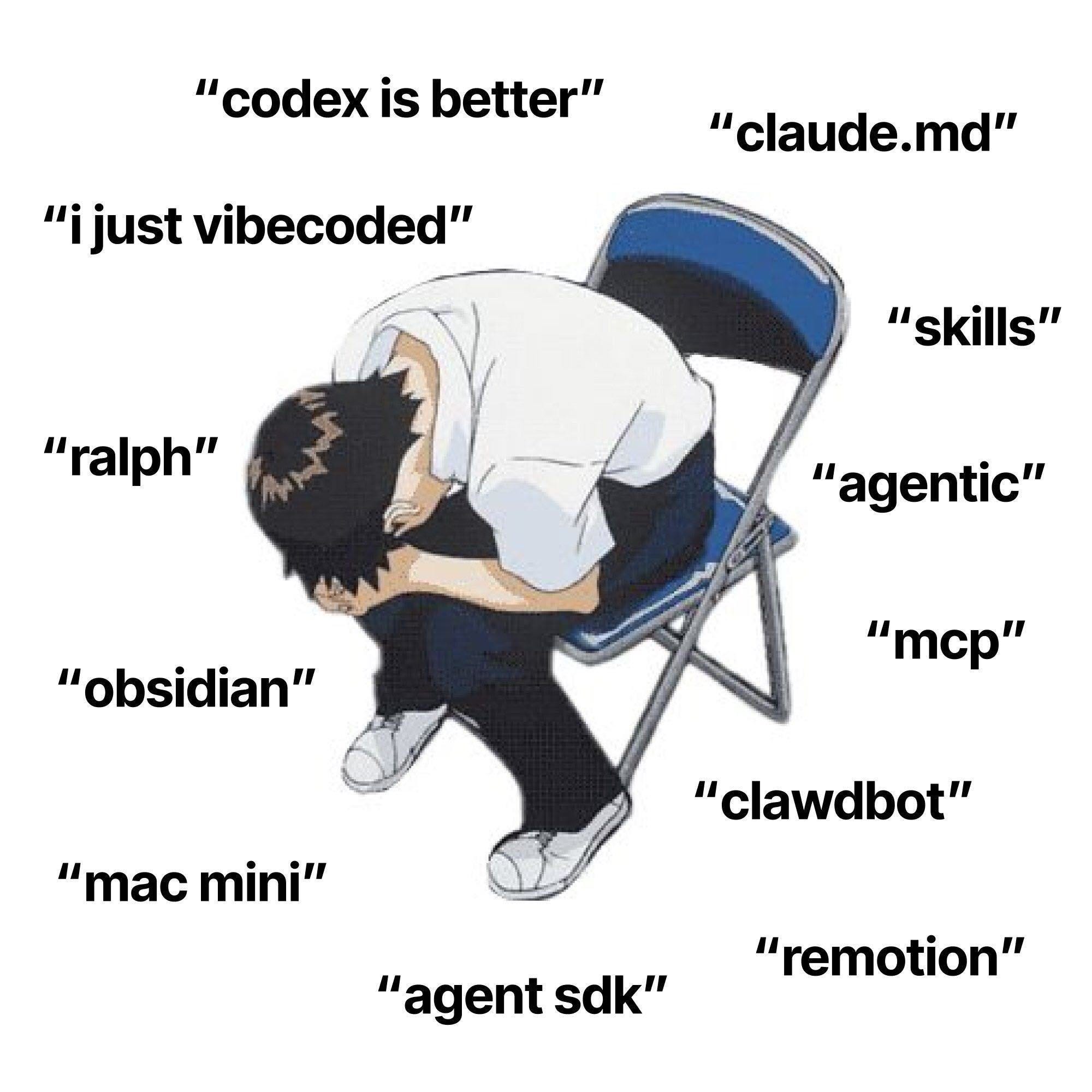
What comes next will be a bit personal. We can think of them as warnings to myself.
There’s serious chaos on social media. Everyone is advertising a new tool or approach. Actually, most are doing this just for engagement. As a result, we also try to use all of them by believing this popularity. Dozens of tools and approaches that we don’t need, that will only waste our time. From locally running LLM models to Ralph loops, from command-line agents to personal assistants that can manage your computer...
I’ve never experienced such an unproductive cycle as trying to keep up. Hours flowing away while thinking “I should do that too, I should try this too,” red eyes, mostly swollen credit card statements. Yes, many of these won’t be useful for my work. Not just mine, but many people in the world. I’m just consuming my most valuable asset, my time, while saying “let’s not fall behind.” I can’t always be at the front. If I accept this, everything will be a bit easier...
So What Should We Do?
My suggestions here should be evaluated both personally and organizationally:
We must have enough knowledge about whatever we’re doing.
If we’re making music with Suno, let’s at least write the lyrics ourselves. Let’s not leave this to ChatGPT too. If we’re writing code, let’s definitely research the market that the product we’re developing serves. Know the programming language the agent codes well enough to understand what it’s doing.
List which AI tools you use
It can be for personal or team use. You’ll see that you’re subscribed to many tools like Claude, ChatGPT, GitHub Copilot, Midjourney. Unfortunately, most may be a waste of resources. Canceling unused subscriptions is necessary.
Make the distinction between critical and experimental.
Not all AI tools have the same value. Some are the lifeline of your workflow, some are just “nice to have.”
Standardization is necessary.
Using different tools constantly both increases costs and spreads knowledge. If possible, choose one tool.
We must focus on productivity.
“We use AI” is not enough. We must be able to answer the question “What did AI bring us?” These answers must be measurable. You can collect these answers under four headings: time, quality, cost, and innovative approach:
Time: A task used to take 4 hours before, how many hours now? (Attention: there can be a 19% slowdown!)
Quality: Did customer satisfaction and error rate change?
Cost: Did external resource use decrease? (e.g., freelance designer need)
Innovation: What did we do thanks to AI that we couldn’t do before?
And this part is very important: Don’t just look at positive metrics. We need to realistically evaluate situations like “We use AI but performance dropped.”
Final Word
Don’t fall into traps. If used carefully and regularly, AI really increases our productivity. But this requires discipline, measurement, and strategy.
I think you should also check this week. How much difference did AI make to your production? Could it be better? What did I do wrong?
More importantly: How many AI tools do you and your team use in total and what is their total cost? Do you know the answer to this question?
I’m waiting for your thoughts and comments.
References
CB Insights. (2025). Venture Trends 2025. https://www.cbinsights.com/research/report/venture-trends-2025/
METR. (2025). Early 2025 AI Experienced OS Dev Study. https://metr.org/blog/2025-07-10-early-2025-ai-experienced-os-dev-study/