

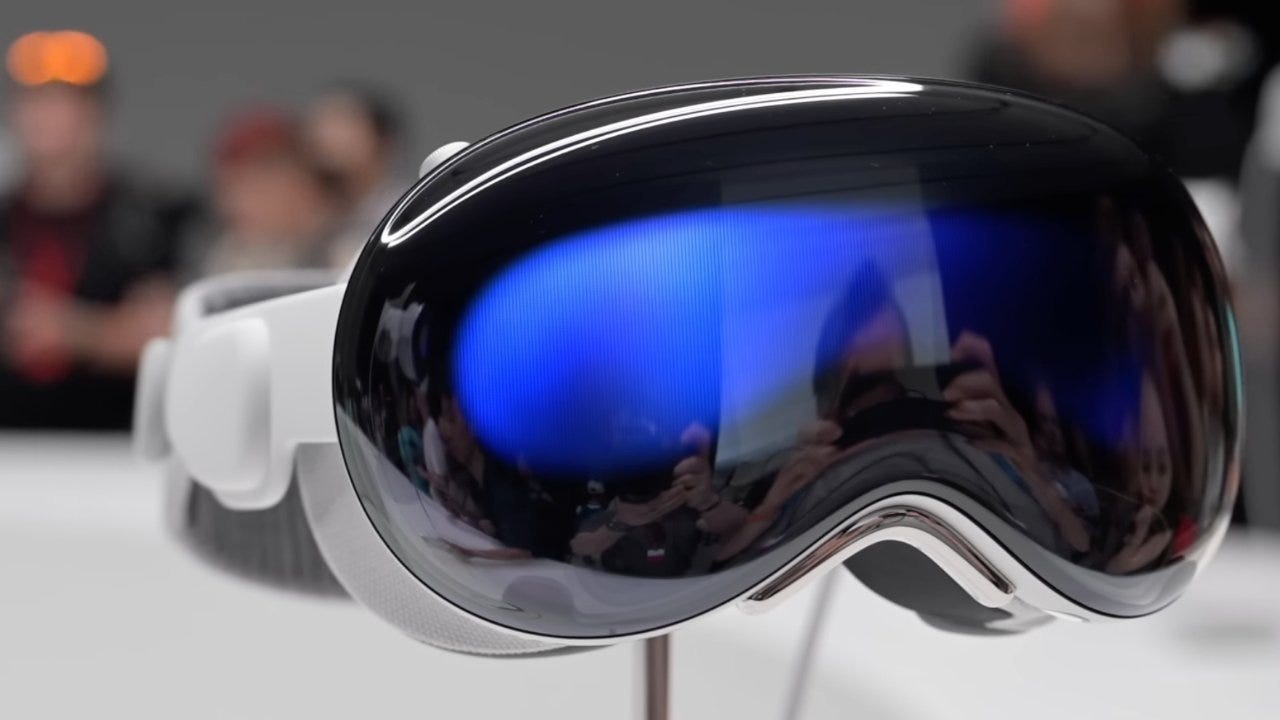
Apple is a technology giant that usually enters the market late but makes perfect products. However, the mixed reality headset Vision Pro was an expensive mistake. It broke this legend, cost the company billions of dollars, and forced Apple to follow its competitors. After the disappointing launch of Vision Pro, Apple had to make an embarrassing U-turn. The company moved its resources to smart glasses that can compete with Meta’s products.
Expensive, Heavy and Lonely
Vision Pro mixes virtual and augmented reality. But with its $3,499 price tag, people think it is too heavy and too expensive to be successful with regular users. Since the product launched, customer interest has decreased day by day. It was not only insufficient in terms of apps and video content, but people also found it socially isolating and clumsy. In fact, Apple managers privately admit the problems with the product. They insist on seeing it as an over-engineered piece of technology. But to be realistic, this failure painfully proves a prediction that Apple CEO Tim Cook made in 2016. Cook said at that time, “Very few people will accept being trapped inside something, because we are all social people at heart.” This device, which was produced against his prediction, shows that Cook actually approached the subject correctly but made a wrong decision.
Over-Engineering
Over-engineering is the act of designing a product to be more robust or have more features than necessary for its intended use. This makes a process unnecessarily complex or inefficient.
The Money is Gone
Of course, the fiasco brought a serious cost to Apple. It is estimated that the company may have spent up to $33 billion on Vision Pro production. However, sales figures to date are thought to be well below 1 million units. Even with the most generous estimates, people think that Apple may have only recovered 10 percent of the money invested from Vision Pro.
Meta’s Leadership: Victory of Simplicity and Artificial Intelligence with Ray-Ban
Actually, Meta has been in the VR glasses field longer than Apple. With Oculus Quest, it has been the most important player in this market for years. But Meta never marketed this device for daily use. The product, which it always positioned in the gaming/entertainment vertical, always met expectations. It did not choose this device to fight with Apple and developed a product that all of us can use daily.
Unlike the dead end that Apple entered with Vision Pro, Meta quickly rose to the leading position in the smart glasses race with this product. Thanks to its partnership with Ray-Ban, Meta followed a strategy that is the exact opposite of Apple’s complex and expensive approach: usefulness, elegance and accessibility.
After Meta launched the first model of smart glasses, Ray-Ban Stories, in 2021, it caught a surprise hit with Ray-Ban Meta in 2023. Ray-Ban Meta glasses (with prices starting from $300) sold 2 million units as of February 2025. This is much higher than the 300,000 units sold by the previous model, Ray-Ban Stories, in the same period. Meta’s success became so great that the owner of Ray-Ban, EssilorLuxottica, confirmed that the product was “a great success” and announced that it plans to increase annual production capacity to over 10 million units by the end of 2026.
Meta is attacking the market with new models to not lose this momentum. These include Ray-Ban (Gen 2) ($379), which focuses on artificial intelligence and voice interaction, has more advanced cameras, and longer battery life, and Oakley Meta Vanguard ($499), a new Oakley model designed for athletes. It also introduced Meta Ray-Ban Display ($799), the first Meta glasses with a screen that allows the user to see text, images and videos directly on the lens.
Mark Zuckerberg says that competitors have not fully emerged yet, that Meta has “invented the category from the ground up,” and that they need to use this opportunity to reach Meta AI glasses to as many people as possible. In other words, he wants to say, “We built the market, if anyone thinks they can beat us, come on.”
Embarrassing Retreat
The wrong calculation Apple made with Vision Pro has now put it in the position of a hasty follower. The company froze the cheaper, lighter Vision Pro variant (code name N100) that it planned to launch in 2027. It urgently directed the people working on the project to work on smart glasses that will compete with Meta’s products.
Apple is working on two types of smart glasses: N50 (which will pair with an iPhone and will not have a screen, targeted to be launched in 2027) and a version with a screen that can challenge Meta Ray-Ban Display. This version is also expected to be on the market in 2028. But after the Apple Intelligence issue, we shouldn’t be hopeful about the delivery date.
Focus Change
However, technology analysts see this sudden focus change as an unusual and embarrassing U-turn for Apple. Analysts state that Apple is not prepared enough for this market change and that for the first time in a long time, it has been “out of the loop.” When you think that smart glasses can take over many basic functions that phones normally perform (taking photos, answering questions with artificial intelligence, translating), this delay poses a threat to Apple’s golden goose, the iPhone.
Too Late?
While the smart glasses market is gaining momentum, Apple’s probable entry into this market in 2027 suggests that it is extremely late. While Meta has established clear leadership in terms of both pricing and market share, Apple’s new smart glasses also need to be very good and successful. Otherwise, Apple will face the risk of being left behind forever in this critical market dominated and rapidly expanding by Meta.
Do you think Apple can be successful in the smart glasses market?
See you in the next article.