

We are used to Silicon Valley’s financial illusions, but Elon Musk has reached a new peak in the art of “moving money from one pocket to another” by bringing xAI under SpaceX’s roof. This move is not just an attempt to create the world’s most valuable private company. It is also a strategic maneuver that shows us the physical infrastructure crisis, taking artificial intelligence beyond being just a software issue. Because the truth is this: the world’s energy grids and water supplies can no longer handle AI’s enormous appetite. At exactly this point, Musk is looking for solutions in the sky by connecting xAI to SpaceX’s satellites.
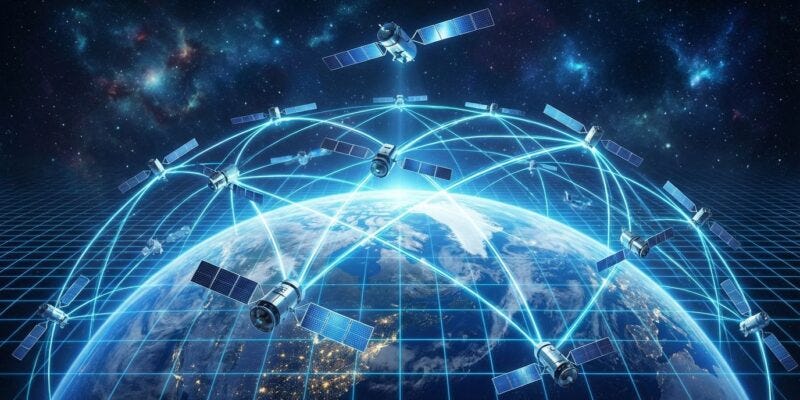
SpaceX and xAI Marriage: A Financial Acrobatics Show
Elon Musk’s move to bring xAI under SpaceX creates a perfect “vertical integration” story on paper. Thanks to this marriage, xAI creates a financial closed loop by connecting its need for massive computing power to SpaceX’s launch capacity. Musk is positioning xAI not like a startup, but as a strategic payload that fills SpaceX’s cargo capacity while also looking for an escape route from the world’s physical limitations. The vision behind this merger is bold: to move AI models beyond cloud computing into “orbital computing.” However, this financial dance forces us to face an unavoidable reality: the world’s physical limits are failing to meet AI’s energy and water needs.
The “Wet” and “Expensive” Drama of Data Centers
Land-based data centers are no longer a sustainable model. Data centers around the world consume 32% more electricity than the entire United Kingdom. The endless appetite of AI (AGI and beyond) demands energy capacities of 5 GW — equal to what a full-scale nuclear power plant produces. Water shortage is also at our door. A typical Google data center uses about 1,700 cubic meters of water per day — more than 3,000 households use daily. For regions already facing water scarcity, this situation is a complete ecological disaster.
According to Goldman Sachs data, AI data centers are expected to make up 8% of US energy use by 2030. This picture, which pushes city grids to their breaking point, is forcing tech giants to “look for alternatives.” Space is the most serious alternative. However, this is about to crash into hard physical laws, in the shadow of Elon Musk’s marketing-driven grand narratives like “Kardashev Type II civilization.”
The Kardashev Scale is an astrobiological measurement that classifies a civilization’s technological development based on the total amount of energy it can control and use. Proposed by Soviet astronomer Nikolai Kardashev in 1964, this framework looks at how “advanced” a species is not from a cultural perspective, but from a purely thermodynamic one. According to Kardashev, information processing capacity and technological complexity are directly linked to energy consumption. The scale is logarithmic and in its original form is divided into three main levels:
Type I: A civilization that can use all the energy falling on its planet, including light from its star.
Type II: A civilization that can directly control all the energy in its star system.
Type III: A civilization that can harvest all the energy in its own galaxy.
Humanity has not yet reached Type I level, currently sitting at around 0.73 — a “Type 0” civilization.
AI in Space: The Infinite Energy and Latency Paradox
Space-based data centers promise independence from Earth. The advantages being talked about are the kind that would make Silicon Valley marketers very excited. For example, solar energy — uninterrupted, 24/7 sunlight with no atmospheric barrier. And it should be added: a solar panel in space is 8 times more efficient than one on Earth. On the cooling side, the vacuum of space can be used for free. Yes, the space vacuum can be -270°C, but it is also a perfect insulator. Getting rid of heat is not quite as “free” as it sounds — it requires serious engineering.
On the topic of latency: laser-based satellite-to-satellite connections are faster than fiber. However, the bitter truth for a ground user is different. The round-trip time from the ground to orbit is between 60 and 190 ms — much worse compared to a land-based data center (10-50 ms).
Let’s Talk About the Facts
The laws of physics are more stubborn than Musk. There are two giant barriers to building a data center in space: Heat and Radiation.
The Cooling Problem: Heat can only be released in a vacuum through radiation. According to the Stefan-Boltzmann law, removing the heat from a 2 MW data center requires about 4,000 square meters of radiator panels — roughly the size of a football field. Also, the power density that reaches up to 100 kW per rack on Earth is limited to 10-20 kW in space due to thermal constraints.
Radiation’s Revenge: In HP’s tests on the ISS, 45% of SSDs failed despite error-correction software. Cosmic rays cause “bit-flip” errors in processors, which can cause AI models to produce nonsense.
The Economic Factor: Current launch costs (with systems like Falcon 9) are around $1,500-$3,000 per kilogram. Sending hardware to space at this cost level is 2.7 to 4.4 times more expensive than building a data center on Earth. For a space data center to commercially compete with facilities on Earth, costs would need to fall below $100 per kilogram.
When Are We Moving?
Actually, the race has already begun. Starcloud (backed by Nvidia) fired the starting gun by claiming to have trained the first AI model in space in December 2025. Starcloud’s Lumen-1 platform is trying to prove that this hardware, built for Earth, can survive in space using Nvidia GPUs.
In 2027, Google plans to launch satellites with TPUs through Project Suncatcher. This will mean we will have seen real, if small, data centers in space. But the really big development may come after 2035, when costs per kilogram fall below $50.
China is not sitting still either. With the Three-Body project, it aims to build a network of 2,800 satellites to create a distributed supercomputer capable of one quintillion operations per second.
Goodbye to the Bills
AI training in space is becoming not a luxury, but a necessity due to the limitations on Earth. On this new frontier where physical laws and financial ambitions collide — if humanity can pull this off — we can say goodbye to gravity, electricity bills, and water bills. Wait, don’t get too excited. This goodbye is only for data centers. But if this AI starts to really bother us, how are we going to pull the plug?
Kaynaklar:
Royal Examiner - “Data Centers in Space: The Pros and the Cons”https://royalexaminer.com/data-centers-in-space-the-pros-and-the-cons/
Space Solar - “Harnessing the Sun’s Energy in Space for the Benefits of an AI-Enabled Future”https://www.spacesolar.co.uk/harnessing-the-suns-energy-in-space-for-the-benefits-of-an-ai-enabled-future/
BBC News - “The Plan to Build Data Centres in Space”https://www.bbc.com/news/articles/cyv5l24mrjmo
Axiom Space - “Axiom Space & Spacebilt Announce Orbital Data Center Node”https://www.axiomspace.com/release/axiom-space-spacebilt-announce-orbital-data-center-node
Google Research - “Exploring a Space-Based Scalable AI Infrastructure System Design”https://research.google/blog/exploring-a-space-based-scalable-ai-infrastructure-system-design/
Hello Future (Orange Innovation) - “Lower Emissions and Reinforced Digital Sovereignty: The Plan for Datacentres in Space”https://hellofuture.orange.com/en/lower-emissions-and-reinforced-digital-sovereignty-the-plan-for-datacentres-in-space/