

The New Face of Immortality
At Rod Stewart's concert on July 29, Rod Stewart released an AI-generated video of Ozzy Osbourne using a selfie stick to pose with Prince, Bob Marley, Freddie Mercury, George Michael, Kurt Cobain and Amy Winehouse. Meanwhile, Rod Stewart sang "Forever Young". "Eternal Stars" is written in the upper left corner of the video. But how ethical or meaningful is this artificial intelligence reanimation of deceased people?
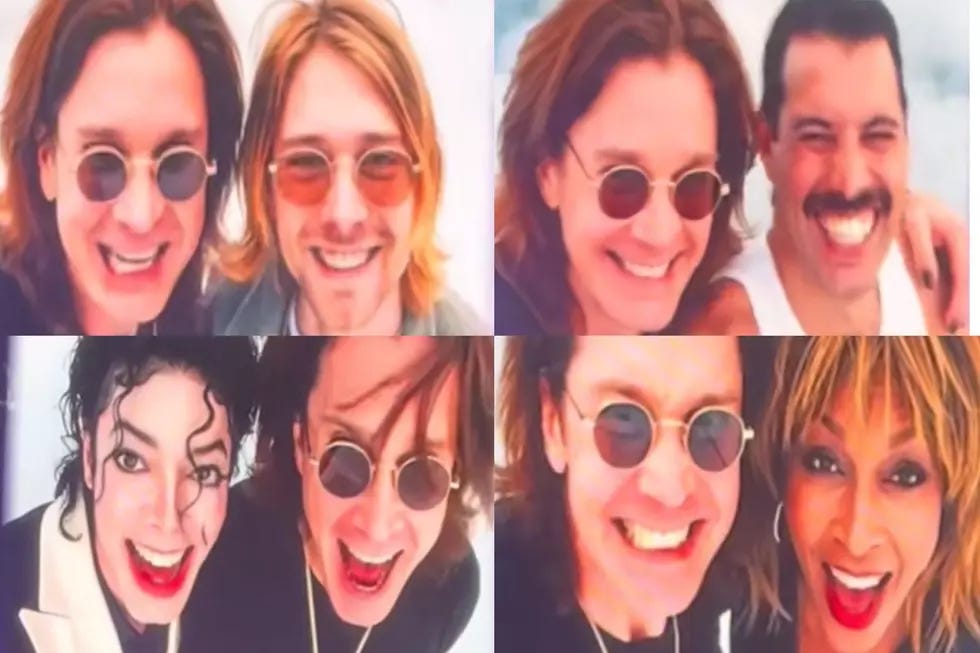
After the video went viral, the internet was awash with news from around the world about people's reactions, both positive and negative. Some fans see it as "disrespectful", while others see no problem with keeping their memory alive and "immortal" in this way. Some people are more obsessed with and opposed to the concept of the "selfie stick" than artificial intelligence :) Although the real life views of the artists were against social media, a different perception is now created with an artificial fiction.
Digital Resurrections
This is not the first time a deceased singer/celebrity has been revived. In 2018, Justin Timberlake sang a duet with the Prince hologram during the Super Bowl performance. In 2020, 8 years after her death, it was announced that Whitney Houston will go on tour with her hologram.
Last year, the Jerry Garcia Foundation made an agreement with Elevenlabs to bring the artist's voice back to life by reading books and articles. Similarly, in 2023, Warner Music Group announced that it had partnered with the estate of Edith Piaf and that an AI-generated copy of Piaf's voice would narrate the movie that would tell the artist's story. (I looked for this movie and couldn't find the finished version).
AI Brought Them Back. But Should It Have?
As Sam Altman said in a podcast with his brother: "We're going to solve the super intelligence but maybe society still sucks. The history of a lot of this stuff has been like people don't quite believe it and then it happens and then people just kind of adjust." When you add the thought AI going viral as in this case, together with the emotional exploitation, the reaction of the society is inevitable rather than adjusting to it.
So at what point will this technology become normalized? Who will educate society for this, even though it seems to be at a point of no return? These are not only ethical questions, but also issues that will redefine the boundaries of copyright, digital heritage and personal privacy in the future.
Technology is advancing too fast before society is ready. Although a cultural, psychological and sociological transformation has begun, our humanly responses are not yet keeping up with the digital pace. The difference between reality and fiction is gradually disappearing.
While talking about AI and digital immortality, I would like to end this article ironically but meaningfully with a quote from a native story: "We have gone so fast that our soul is left behind. We must stop and wait for our souls to catch up with us." Technology will not catch its breath, but I hope that we can keep up with the speed of AI with our emotions and values.