

The process of transferring TikTok’s US operations from its Chinese parent company ByteDance to an American group has become one of the most complex geopolitical, legal, and economic stories of recent years.
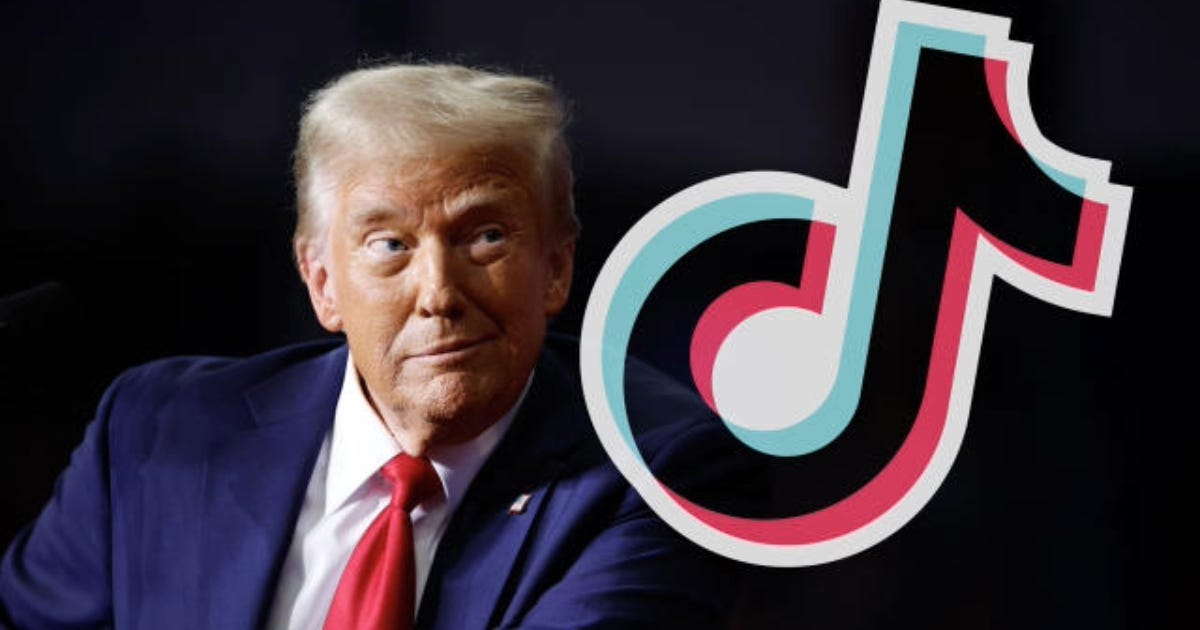
The process started in 2024 when the US Congress accepted a law to ban the app. After many extension decisions, long negotiations, and dozens of different buyers appearing, President Donald Trump finally signed an executive order in September 2025. I say “finally” because the Chinese company ByteDance was never really present during this process. Everything happened without them. This agreement is not only changing the ownership of a social media platform, but also reshaping national security perceptions.
From Legal Requirement to New Partnership
The transfer of TikTok’s US operations came from the need to follow US laws that see the app as a “national security threat.” At least, this is what we know. While Joe Biden was president, Congress gave ByteDance a firm deadline to transfer its US operations to an American buyer. Otherwise, the app would be completely banned.
President Trump also supported this law. But he couldn’t really put it into practice. After extending the deadline several times, and influenced by his meetings with Chinese President Xi Jinping, he signed an order approving American and international investors to take over TikTok’s US assets. According to the agreement, one of the most important conditions is that the Chinese parent company ByteDance must have less than 20% shares in the new company. This means that the majority of shares and control of the platform’s US operations will pass to American organizations.
Although different numbers are mentioned about the value of the new TikTok US, estimates range between 14 billion and 40 billion dollars. The American investor group that plays an active role in the purchase includes important players like Oracle (a database and cloud technology giant), venture capital firm Andreessen Horowitz, and private equity company Silver Lake Management LLC. This group’s share in the new structure will be about 50%. The remaining 30% will belong to international and American capital companies (like General Atlantic, Susquehanna International Group, KKR) that invested in the Chinese parent company. So US companies will manage around 80% of the shares.
Algorithm Transfer and Oracle’s Mission
TikTok’s most important feature that made it successful worldwide is its advanced content recommendation algorithm that decides which videos users see on their screens. For the US government, the most critical part of the agreement was to completely remove this algorithm from the potential control of the Chinese government.
The new agreement aims to solve this critical problem: The app’s main algorithm and codes will be opened to US partners. The goal is for the algorithm to work only with American user data now. Oracle, one of the key names in the agreement, will not only manage TikTok’s data storage infrastructure in the US, but will also supervise this algorithm. This supervision creates a technical barrier that aims to prevent the Chinese partner from manipulating the algorithm or accessing US user data.
To ensure data security, it was also decided that six out of seven members of the new TikTok US board of directors must be American. This structure aims to guarantee that the platform’s future strategic decisions and data policies will be completely under American control. The executive order also shows that this transfer plan meets the national security requirements of the 2024 law.
The China Factor
Although the TikTok transfer process is shown as a political victory on the US side, there is an important obstacle that must be overcome for the agreement to be completed: approval from the Chinese government. The algorithm is considered a critical asset on China’s technology export control list, and Beijing must give an official export license for its transfer. Although the Chinese government emphasizes that negotiations should proceed within “market rules,” it is still unclear whether they will approve the transfer of this strategic technology. In fact, completing the agreement without China’s approval is not legally possible.
On the other hand, the effects of the new structure on user experience are also a matter of curiosity. Experts are skeptical about whether it will provide an experience as strong as the old TikTok. Whether an algorithm retrained with US data can maintain the dynamism that ensured the app’s global version’s popularity will be decisive for the app’s future in the US.
Conclusion
The transfer of TikTok’s US operations is the US’s harshest move against Chinese technology companies and the most concrete step in the process called the digital Cold War. The process that started with former President Joe Biden seems to be completed with Trump’s executive order. With China’s approval, TikTok’s operations in the US will be largely freed from Chinese influence and transformed into a structure under American majority control.
A popular social media app causing national security concerns is a historical example. This seems like a result that could cause a chain reaction. After this example, many countries might follow the same path. For example, we could also ask Instagram or TikTok to transfer their Turkey operations to Turkish companies. Do you think we should?
See you in the next article.